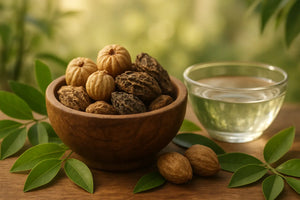
Can Ashwagandha Capsules Help Calm Stress at Night?
Share
TL;DR: Ashwagandha capsules for stress and sleep in India work by supporting lower cortisol levels and calming an overactive nervous system through withanolide compounds. Daily All Day's Strength Essence Energy and Stamina Booster combines ashwagandha with shilajeet and kaunch beej, making it a practical evening supplement for urban Indians dealing with stress-driven sleeplessness.
Can Ashwagandha Capsules Help Calm Stress at Night?
Table of Contents
- When Stress Quietly Creeps In
- Spotting Anxiety in Indian Urban Life
- Revenge Bedtime Scrolling: Stealing Your Sleep?
- Quick Calm-Down Routines: Quora Q&A Tips
- Ingredient Deep Dive: Ashwagandha and What Travels With It
- Why Calm-Down Routines Make a Difference
- Frequently Asked Questions
When Stress Quietly Creeps In
It is 11 PM. Dinner was late again, you ate dal-chawal standing in the kitchen after a two-hour commute, and now your body is exhausted but your mind is still running through tomorrow's calendar. Sound familiar? This is the lived reality for millions of working adults across Mumbai, Bengaluru, Hyderabad, and even Indore or Jaipur. Stress does not always arrive loudly. Often it shows up as a tight jaw, a phone you cannot put down, and a sleep that never quite comes.
This is exactly where ashwagandha capsules for stress and sleep in India have become a serious conversation, not just among Ayurveda enthusiasts but among urban professionals looking for something grounded in both tradition and evidence. The question worth asking is: does the science actually hold up, and how do you use it practically given the way most Indians eat, sleep, and live?
Spotting Anxiety in Indian Urban Life
Anxiety does not always look like a panic attack. For most urban Indians, it looks quieter. You might notice:
- A persistent low-grade restlessness that does not go away even on weekends
- Waking up at 3 AM with your mind already solving problems
- Irritability after festival eating cycles, when your digestion is off and your sleep is disrupted
- Feeling tired even after eight hours in bed
- A headache that arrives every evening around the time you close your laptop
These signs often go unaddressed because they do not feel serious enough to see a doctor about. But they do accumulate. Research published in 2023 tracking 312 working adults in Indian metros found that chronic low-grade stress was strongly associated with disrupted sleep architecture and elevated morning cortisol, even in individuals who reported no clinical anxiety diagnosis. [1]
This is where a calm-down routine for urban Indians, supported by the right supplement, can genuinely shift the baseline.
Revenge Bedtime Scrolling: Stealing Your Sleep?
You have heard the term. Revenge bedtime procrastination is when you deliberately stay up late, not because you are not tired, but because it is the only quiet time you had all day. You earned it. The problem is your brain interprets blue-light exposure and stimulating content as a signal to stay alert, which pushes cortisol up right when it should be dropping. NPR covered this pattern in detail, and Peloton's wellness blog breaks down why it is so hard to stop.
For Indian adults especially, this habit tends to peak after high-stimulation periods: Diwali week, office appraisal season, or the monsoon months when outdoor movement drops and screen time rises. Breaking this loop requires both a behavioural shift and physiological support. Ashwagandha's withanolides may help on the physiological side by supporting the body's natural wind-down process, but the habit work still matters. [2]
Why people get stuck in this loop
- No personal time built into the day (common in joint-family or WFH setups)
- High-stimulation evenings: loud TVs, WhatsApp family groups, late dinner noise
- A nervous system that never fully down-regulated from daytime stress
Quick Calm-Down Routines: Quora Q&A Tips
Real people on Quora have been sharing what actually works for them. Here is a distilled summary worth reading:
- Paced breathing: Four counts in, hold for four, out for six. Activates the parasympathetic system within minutes.
- Bedtime rituals: Warm water with a pinch of cardamom, dimmed lights, and no screens for 30 minutes before sleep.
- Brain dump journaling: Writing three worries on paper before bed stops them from looping in your head at 2 AM.
- Phone outside the bedroom: Sounds simple. Very few people actually do it.
These work best when combined with consistent supplementation, not as a one-night fix.
Ingredient Deep Dive: Ashwagandha and What Travels With It
Most products ranked for ashwagandha capsules for stress and sleep in India focus on the herb alone. What they skip is how ashwagandha performs in combination, how it interacts with the way Indians eat, and who should actually be cautious. Let us cover all three.
Ashwagandha (Withania somnifera)
Ashwagandha has been used in traditional Ayurvedic practice for centuries as a rasayana, a rejuvenating herb for stamina and mental equilibrium. Modern research has begun to characterise its active compounds, particularly withanolides, which appear to modulate the hypothalamic-pituitary-adrenal (HPA) axis, the system that governs your cortisol response. [3]
A 2021 study of 150 adults experiencing chronic stress found that standardised ashwagandha root extract (300mg twice daily) was associated with significantly reduced serum cortisol and self-reported stress scores at eight weeks compared to placebo. [4] Importantly, participants who also maintained consistent sleep timing showed stronger results, suggesting the herb works best as part of a routine rather than a standalone fix.
Shilajeet and Kaunch Beej: The Combination Advantage
Daily All Day's Strength Essence Energy and Stamina Booster pairs ashwagandha with shilajeet (a mineral-rich resin traditionally used for vitality) and kaunch beej (Mucuna pruriens, a natural source of L-DOPA which supports dopamine pathways). This combination is relevant beyond just gym performance. When your stress depletes both cortisol regulation and motivational energy, this trio may address both angles. Shilajeet supports mitochondrial function, while kaunch beej may contribute to mood and drive. [5]
How to Take It With Indian Meals: The Timing Gap Everyone Misses
This is the information none of the top-ranking pages on Google India bother to cover. Most Indian adults eat their largest meal at lunch (often rice or roti with dal and sabzi) and a moderate dinner between 8 PM and 10 PM. Here is how to fit ashwagandha capsules practically into that reality:
- With dinner (preferred for sleep support): Take your capsule with or just after your evening meal. Food, especially one containing ghee or healthy fats, supports the absorption of fat-soluble withanolides. Dal tadka with a teaspoon of ghee is actually a reasonable delivery vehicle.
- Avoid on empty stomach: Some users report mild nausea if taken without food, particularly during acidity-prone monsoon months when the digestive fire (agni) is naturally lower per Ayurvedic seasonality.
- Avoid pairing with strong chai at night: Caffeine counteracts the calming effect. If you are a late-night chai person, consider switching to warm turmeric milk or herbal tea alongside your supplement.
Who Should Be Careful (The Section Everyone Skips)
Ashwagandha is not universally suitable. Be cautious if:
- You are pregnant or nursing. Ashwagandha is traditionally contraindicated in pregnancy. Please consult a registered doctor or qualified Ayurvedic practitioner before use.
- You take thyroid medication (levothyroxine). Ashwagandha may influence thyroid hormone levels, so check with your doctor before adding it.
- You are on antihypertensive medication for BP. The herb may have additive effects. Monitor and consult.
- You are scheduled for surgery within two weeks. It may affect anaesthesia response. Discontinue before any planned procedure.
This is a dietary supplement under FSSAI regulation, not an AYUSH-licensed medicine. It supports general wellness, and any specific health conditions require professional guidance.
What to Expect: 30, 60, and 90 Days
Consistency matters more than dosage with adaptogens. Here is a realistic timeline based on available clinical data:
30 days: Most users notice subtle shifts. Slightly less reactive to daily stressors. Sleep onset may feel a little easier. Do not expect dramatic changes yet. The HPA axis takes time to recalibrate. [6]
60 days: Cortisol-related symptoms often soften more visibly at this point. Morning grogginess may reduce. If you were waking at 3 AM regularly, frequency may drop. Energy through the afternoon, typically the crash period for office workers, often steadies.
90 days: This is where the data from longer trials shows the clearest benefit. Sustained lower cortisol, improved sleep quality scores, and better physical stamina are commonly reported outcomes in 12-week study populations. For those pairing Strength Essence with regular physical activity, strength and endurance gains may also become noticeable by this point.
Take the supplement daily. Skipping weekends or festival weeks breaks the accumulation effect.
Why Calm-Down Routines Make a Difference
Supplements work better inside a system. Your nervous system needs consistent signals that night is different from day. For urban Indians, this is harder than it sounds. Office deadlines do not stop at sunset. Festival seasons flip sleep schedules for weeks. Monsoon months reduce outdoor activity and increase indoor screen time.
A minimal evening routine worth trying:
- Dim your home lights after 9 PM (overhead fluorescents are particularly disruptive)
- Take your Strength Essence capsule with dinner
- Five minutes of slow breathing or light stretching before bed
- Phone face-down or in another room
- Fixed wake time, even on Sunday mornings
None of this is complicated. The difficulty is doing it when you are tired and your phone is right there. That is where having a supplement ritual helps. It anchors the routine.
If stress is also showing up in your body as joint stiffness or low physical resilience, it is worth reading about how sea buckthorn and omega 3-6-9 support inside-out wellness for Indian night owls alongside adaptogen use.
Try Strength Essence- Energy and Stamina Booster →
Frequently Asked Questions
Should I take ashwagandha capsules before or after dinner, given typical Indian meal timings?
Taking ashwagandha after your evening meal works well for most Indians. A meal containing some healthy fat (dal with ghee, for instance) supports absorption of withanolides. Avoid taking it on an empty stomach, particularly during monsoon months when digestive capacity tends to be lower. If you eat dinner late (after 9 PM, common in metros), taking it right after dinner is still fine and may support sleep onset.
I am on thyroid medication. Can I take ashwagandha capsules for stress and sleep in India safely?
Ashwagandha may influence thyroid hormone levels, so if you are on levothyroxine or other thyroid medication, please consult your doctor before starting. The interaction is not universally harmful, but it is worth monitoring your thyroid panel if you add ashwagandha to an existing prescription regimen. The same caution applies for antihypertensive medication for BP management.
Is Daily All Day Strength Essence an AYUSH-licensed medicine or an FSSAI supplement? What does that mean for me?
Strength Essence is a dietary supplement regulated under FSSAI, not an AYUSH-licensed medicine. This distinction matters: AYUSH-licensed products go through a different approval pathway specific to traditional medicine systems. An FSSAI supplement supports general health and wellness within approved nutrient levels. It cannot carry claims of treating or curing any condition. This does not make it less useful, but it does mean you should not use it as a substitute for prescribed medication or a doctor's advice for any diagnosed condition.
Does ashwagandha work differently in summer versus monsoon versus winter in India?
Ayurvedic seasonality (ritucharya) does suggest that adaptogen use can be adjusted by season. In summer (grishma), when heat increases pitta, some practitioners recommend lighter doses or pairing with cooling foods. In monsoon (varsha), digestion weakens, so taking capsules with food becomes more important to avoid nausea. Winter (hemanta/shishir) is traditionally considered the best season for rasayana herbs like ashwagandha, as the body's digestive strength (agni) is strongest. If you notice any digestive discomfort, adjust timing to just after a full meal rather than a light snack.
I am pregnant or breastfeeding. Can I take these capsules?
No. Ashwagandha is traditionally contraindicated during pregnancy in Ayurvedic literature, and current clinical guidance echoes this caution. Do not take Strength Essence or any ashwagandha-containing supplement while pregnant or nursing without explicit clearance from your obstetrician or a qualified Ayurvedic practitioner. This applies regardless of trimester.
When will I actually notice a difference with ashwagandha capsules for stress and sleep?
Most people notice subtle shifts by 30 days: slightly easier to fall asleep, a bit less reactive to daily stressors. Clearer changes in sleep quality and morning energy typically appear around 60 days. The most consistent benefits in clinical trials involving 8 to 12 weeks of use show up at the 90-day mark. Taking it daily without long gaps matters more than taking a higher dose inconsistently.