Can Berberine Support Thyroid and Blood Sugar in Women?
Share
Short answer: Berberine, the active compound in Daruharidra (Berberis aristata), activates AMPK, an enzyme that helps the body manage blood sugar and metabolic rate. For Indian women managing thyroid-related weight gain or sluggish metabolism, Daily All Day Gluco Wise Blood Sugar Support combines berberine with Ceylon cinnamon and milk thistle as a gentle daily metabolic aid.
Can Berberine Support Thyroid and Blood Sugar in Women?
Table of Contents
- Thyroid Symptoms: Why Do Indian Women Miss Them?
- Weight Fluctuations and Brain Fog
- Why Thyroid Health Really Matters
- Choosing a Gentle Daily Support Plan
- Ingredients Deep Dive: Gluco Wise
- Thyroid Friendly Foods & Foods to Avoid
- Quora QnA & Top Internet Questions Answered
- Frequently Asked Questions
Thyroid Symptoms: Why Do Indian Women Miss Them?
It's 11 PM. You've finished a late dinner after a long WFH day, and you're exhausted, but not the good kind of tired. The kind where your brain just won't switch off cleanly, your weight has quietly crept up despite skipping the Diwali mithai this year, and your hair is everywhere except your head. Most Indian women in this situation blame stress, bad sleep, or a hectic schedule. Many are right. But a significant number are missing something else.
One in ten Indians is estimated to have a thyroid disorder, and women are five to eight times more likely to be affected than men. Yet symptoms get dismissed because they look exactly like routine urban exhaustion. Early signs to watch for:
- Unexplained weight gain, or sudden weight loss without effort
- Persistent low energy and daily fatigue that rest doesn't fix
- Mood swings, irritability, or low-grade anxiety
- Brain fog, slow recall, or difficulty concentrating through the afternoon
- Dry skin, brittle nails, hair thinning, or outer-third eyebrow loss
- Feeling cold all the time, even in a Chennai summer
Indian health professionals are raising awareness. See this clinical post on thyroid awareness from Ruby Hall Clinic for context on how commonly these symptoms are missed in routine checkups.
The tricky part: many of these signs overlap with iron deficiency, PCOD, perimenopause, and plain old burnout. A TSH blood test is the first step, not a supplement. Always confirm with your doctor.
Weight Fluctuations and Brain Fog: Why They're Linked to Your Thyroid
Hypothyroidism slows your metabolism. Your body burns fewer calories at rest, making weight gain almost inevitable even when your diet hasn't changed. The brain fog is real too, not imagined. Low thyroid hormone affects neurotransmitter signalling, which is why concentration feels sticky and afternoons feel impossible.
- A sluggish thyroid means your gut slows down too, worsening bloating and constipation.
- Insulin sensitivity often drops alongside thyroid function, creating a blood sugar-thyroid loop that compounds weight gain.
- On the other side, hyperthyroidism revs everything up: anxiety, heart palpitations, unexplained weight loss, and constant restlessness. Apollo Hospitals explains why your thyroid is your body's control centre, and what happens when it goes off rhythm.
Here's the gap most online articles miss for Indian women specifically: the blood sugar-thyroid connection is two-way. When insulin sensitivity drops (common in women eating a high-refined-carb Indian diet of maida rotis, white rice, packaged biscuits), thyroid hormone conversion can suffer. Supporting blood sugar stability is not separate from supporting thyroid function. They are the same conversation.
This is precisely where berberine for thyroid and blood sugar support in India is getting attention from integrative practitioners. Not as a medicine. As a daily metabolic aid that addresses both sides of this loop simultaneously.
Why Thyroid Health Really Matters: The Hidden Risks
- Normal thyroid function underpins heart rate, body temperature, menstrual regularity, fertility, hair growth, and cognitive clarity.
- Long-term unaddressed thyroid imbalance can increase the risk of cardiovascular complications, severe fatigue, and fertility challenges.
- Rarely, poorly managed conditions like Graves' disease can lead to irregular heart rhythms and serious cardiac events. [1]
- Chronic stress, a fixture of metro Indian life, disrupts thyroid hormone levels and may contribute to autoimmune thyroid conditions like Hashimoto's. [2]
- Postpartum thyroiditis strikes weeks to months after delivery, often disguised as "new mother exhaustion." [3]
Many Indian women normalize these symptoms for years. Awareness changes that pattern. Early lab work is cheap and saves years of unnecessary struggle.
Choosing a Gentle Daily Support Plan
For women with borderline thyroid mentions on lab reports, or those wanting to support overall metabolic balance, a steady, gentle routine works better than extreme interventions. Here's what that looks like practically:
- Screen regularly: TSH, T3, and T4 as part of annual checkups, especially if you notice weight shifts, persistent tiredness, or mood changes.
- Stress management: Yoga, pranayama, and evening walks are free. They genuinely matter for cortisol and thyroid balance.
- Nutritional gaps: Most urban Indian diets are low in selenium, zinc, and magnesium, all of which directly support thyroid enzyme function.
- Ayurvedic metabolic support: Berberine for thyroid and blood sugar support in India sits at the intersection of traditional use (Daruharidra has been used in Ayurveda for centuries to support liver and metabolic function) and modern research on AMPK activation and insulin sensitivity.
- New mothers especially: If fatigue and brain fog are intense post-delivery, get thyroid checked before attributing everything to sleeplessness. [3]
If you are already on thyroid medication (levothyroxine is common in India), always consult your doctor before adding any supplement. Berberine can interact with certain medications, and timing matters.
Also see: Can Berberine Help Thin Indians With Hidden Blood Sugar Risk? if you're in the "normal weight but metabolically struggling" category, which is surprisingly common in Indian women with borderline thyroid mentions.
Ingredients Deep Dive: What Makes Gluco Wise Special for Thyroid and Blood Sugar Support?
Daily All Day Gluco Wise (90 capsules) is an FSSAI-registered dietary supplement, not an AYUSH-licensed medicine. That distinction matters for Indian buyers: it means it's regulated as a food supplement under FSSAI standards, manufactured in GMP and HACCP-certified facilities. It makes no medical claims. What it offers is targeted nutritional and botanical support.
Berberine for thyroid and blood sugar support in India is central to what Gluco Wise does. Here's what's inside and why each ingredient earns its place.
Berberis Aristata (Daruharidra / Indian Barberry)
The active compound, berberine, activates AMPK (adenosine monophosphate-activated protein kinase), sometimes called the body's metabolic master switch. A 2021 review of 46 clinical trials published in Frontiers in Pharmacology found berberine significantly supports healthy fasting blood glucose and post-meal glucose response. In Ayurveda, Daruharidra has been traditionally used to support liver health and metabolic function, both directly relevant to thyroid-related weight concerns.
Crucially, for Indian readers: most studies cited globally used 500 mg taken with meals. The berberine-blood sugar-thyroid loop is partly mediated through the liver, where T4 converts to the active T3 hormone. A healthier liver means more efficient hormone conversion. [4]
Ceylon Cinnamon (Dalchini)
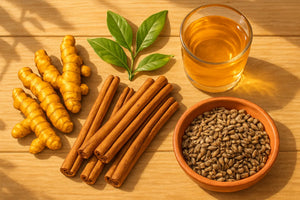
Not the cheap cassia variety from the kirana store. Ceylon cinnamon (true dalchini) supports insulin receptor sensitivity, helping cells respond better to insulin. This matters enormously for thyroid-affected women, because insulin resistance is a common co-traveller with hypothyroidism. It also helps reduce post-meal blood sugar spikes, which matter if you're eating a typical Indian meal of rice, dal, and sabzi.
Milk Thistle (Silymarin)
The liver is where most thyroid hormone activation happens. Milk thistle is one of the most researched botanical liver-support ingredients globally. It supports the liver's detoxification capacity and may help protect against fatty liver accumulation, which is increasingly common in Indian women with PCOD or thyroid-related metabolic issues.
Plant-Based Capsule
100% vegan. No gelatin. Suitable for all dietary preferences common in India.
How to Take Gluco Wise with Indian Meal Timings
This is something none of the top-ranking articles on berberine for thyroid and blood sugar support in India actually address. Timing matters.
- Take 1 capsule after breakfast (ideally within 30 minutes of your morning meal, whether that's idli-sambar, paratha, or oats).
- Take 1 capsule after dinner, before 9 PM if possible. Late Indian dinners (10 PM+) can blunt the benefit.
- Do not take on an empty stomach. Berberine on an empty stomach can cause mild nausea in some people.
- If you take levothyroxine in the morning (standard Indian protocol), take your thyroid medication first, wait at least 45 minutes, then have breakfast and your Gluco Wise capsule. Never mix them without your doctor's guidance.
- During monsoon months, when appetite shifts and gut motility changes, some users find taking it with a warm meal (dal chawal, khichdi) more comfortable than a cold breakfast.
30 / 60 / 90 Day What to Expect
30 days: Most users notice steadier energy through the afternoon, fewer post-meal crashes, and reduced cravings for sweet chai biscuits or evening snacks. Sleep quality often improves modestly. Weight changes are not the headline at this stage.
60 days: Blood sugar stability tends to show more clearly. If you track fasting glucose at home, numbers often trend toward a steadier range. Brain fog may lift noticeably for some women. This is also when the liver-support effects of milk thistle begin to compound.
90 days: The fuller picture of metabolic support becomes visible. Consistent users with thyroid-related weight concerns often report that the scale moves slowly but steadily alongside lifestyle changes. Retesting TSH and fasting glucose at 90 days gives you actual data to discuss with your doctor. Berberine for thyroid and blood sugar support in India works as a long-term metabolic ally, not a 2-week fix.
Pair with Try Gluco Wise Blood Sugar Support →
Thyroid Friendly Foods & Foods to Avoid
Thyroid mein kya-kya khana chahie? (What to eat for thyroid health?)
- Selenium-rich foods: Brazil nuts (2 per day is enough), cashews, sunflower seeds, and eggs. Selenium directly supports the enzyme that converts T4 to active T3. [4]
- Iodized salt: Use it, but don't overdo it. One teaspoon daily in cooking is sufficient for most Indian adults.
- Dahi and fermented foods: Gut health and thyroid hormone absorption are connected. Fresh homemade dahi, buttermilk, and kanji support the gut microbiome.
- Simple dals and green leafy sabzis: Palak, methi, and moringa leaves provide iron, zinc, and folate that support thyroid enzyme function.
- Whole grains over refined: Bajra roti, brown rice, and oats over maida and white rice, especially for women managing thyroid-related blood sugar concerns.
- Ghee in moderation: Good quality ghee supports fat-soluble vitamin absorption (A, D, E, K), all relevant to thyroid function. Small amounts daily are fine for most people.
Thyroid mein kya-kya nahin khana chahie? (What to limit?)
- Very large quantities of raw cruciferous vegetables (raw cabbage, broccoli, cauliflower) may affect iodine uptake in large amounts. Cooking reduces this effect significantly. Don't eliminate them entirely.
- Processed snacks, namkeen, packaged biscuits, and bakery items made with refined flour and seed oils.
- Excess sugar and carbonated drinks, which worsen insulin resistance.
- Soy in very high quantities (soy milk as main dairy substitute all day) can interfere with thyroid hormone absorption in some individuals. Standard use in Indian cooking is fine.
- Unregulated herbal powders or supplements bought without checking FSSAI registration.
Quora QnA & Top Internet Questions Answered
-
How can you tell if fatigue and weight gain are thyroid-related or just stress?
- If tiredness comes with hair thinning, dry skin, feeling cold, or slow heart rate, get a TSH test. These physical signs point beyond stress.
- If stress is high but skin, hair, and heart rate are normal, try sleep and stress management first before assuming thyroid.
- Both can coexist. Stress elevates cortisol, which suppresses thyroid hormone conversion. They're not mutually exclusive.
-
What are normal thyroid values for Indian women?
TSH is generally considered normal between 0.4 and 4.0 mIU/L, but many integrative practitioners in India treat symptomatic women at TSH above 2.5. Always interpret with your doctor, not just a reference range. -
Is berberine safe to take with levothyroxine (thyroid medication)?
There is no established direct interaction, but berberine affects how the liver processes many compounds. Take thyroid medication first in the morning (on empty stomach, standard Indian protocol), wait 45 minutes, then have breakfast and your Gluco Wise capsule. Always confirm with your prescribing doctor. -
Does berberine for thyroid and blood sugar support work differently in summer vs monsoon in India?
Seasonally, Ayurveda's ritucharya framework does suggest metabolic function varies. In summer (Grishma), appetite is naturally lighter. In monsoon (Varsha), digestion can be sluggish. Taking berberine with warm, cooked meals in monsoon (khichdi, dal) is gentler on the gut than taking it with raw or cold foods. -
Can thyroid conditions be fully resolved?
Most thyroid conditions require long-term management. Hashimoto's and Graves' are autoimmune in nature. With consistent lifestyle changes, appropriate medical treatment, and supportive nutrition, quality of life can improve substantially. [2] -
What are the best daily habits for thyroid and blood sugar support?
- Morning sunlight (20 minutes) for Vitamin D, which supports thyroid receptor sensitivity.
- Evening walks, even 30 minutes, to manage cortisol and improve insulin sensitivity.
- Consistent meal timings rather than skipping breakfast and eating heavily at 10 PM.
- A gentle botanical supplement like Gluco Wise as part of a broader routine, not a standalone fix.
Frequently Asked Questions
Should I take Gluco Wise before or after meals, and does it matter which meal?
Take it after meals, not before. Berberine on an empty stomach can cause mild nausea or digestive discomfort. Ideally, one capsule after breakfast and one after dinner. If your dinner is very late (post 9:30 PM, common in Mumbai or Delhi with long commutes), shift the evening dose to after lunch instead. The key is pairing it with food to support absorption and reduce gut sensitivity.
I'm on levothyroxine for hypothyroidism. Can I take Gluco Wise alongside it?
There is no documented direct drug interaction between berberine and levothyroxine, but berberine does influence liver enzyme activity, which affects how many compounds are metabolised. The standard Indian protocol for levothyroxine is first thing in the morning on an empty stomach. Take Gluco Wise at least 45 to 60 minutes later, after breakfast. Do not take them at the same time. Always inform your endocrinologist or physician that you are using a berberine-containing supplement.
Is Gluco Wise an AYUSH-approved medicine or an FSSAI supplement? What's the difference?
Gluco Wise is an FSSAI-registered dietary supplement, not an AYUSH-licensed medicine. This is an important distinction for Indian buyers. AYUSH-licensed products are classified as medicines and can make specific therapeutic claims. FSSAI supplements are food products that support general nutrition and wellness. Gluco Wise makes no claim to treat, cure, or diagnose any condition. It is manufactured in GMP, HACCP, and ISO-certified facilities and is safe for daily use within the recommended dose. If you need medical treatment for thyroid or diabetes, consult a registered doctor.
Who should NOT take Gluco Wise or berberine-based supplements?
Berberine-containing supplements are not suitable for: pregnant women (berberine has been shown in animal studies to cross the placental barrier; consult a registered gynaecologist or Ayurvedic practitioner before any supplementation during pregnancy or nursing); women who are breastfeeding; anyone on blood-thinning medications, immunosuppressants, or hypoglycaemic drugs without medical supervision; individuals with severe liver or kidney conditions; and children. If you have recently had surgery or are