Can Berberine Support Fatty Liver and Blood Sugar?
Share
Quick answer: Berberine, sourced from Berberis aristata (Daruharidra), activates the AMPK pathway to help maintain healthy blood sugar and support fat metabolism in the liver. Gluco Wise Blood Sugar Support combines berberine with Milk Thistle and Ceylon Cinnamon, making it a practical daily supplement for Indians managing fatty liver blood sugar connection India concerns.
Can Berberine Support Fatty Liver and Blood Sugar?
Table of Contents
- What is Fatty Liver and Why It Matters
- How is Fatty Liver Detected in India
- Why Early Action Matters
- Where Gluco Wise Fits in Daily Liver Support
- Ingredients Deep Dive: Gluco Wise
- Ouora QnA: Fatty Liver and Gluco Wise in Indian Adults
- Natural Support Routine for Fatty Liver in Indians
- Read More on Liver & Metabolic Health at Daily All Day
- Frequently Asked Questions
Your routine ultrasound comes back with "grade 1 fatty liver." The radiologist sounds calm. Your doctor says "lifestyle changes." You walk out with a printout and zero practical direction. Sound familiar? You are not alone. Nearly 38% of urban Indians now show some degree of hepatic steatosis on imaging, according to data pooled across multi-city gastroenterology studies, and the numbers are climbing steadily in tier-2 cities too.
What most online articles miss, especially the ones ranking for berberine for fatty liver and blood sugar support India, is the very specific reality of the Indian metabolic picture: a diet built around rice, roti, dal, and ghee; irregular meal timings because of long commutes or work-from-home blurred schedules; and a cultural hesitation to take "allopathic" daily pills for something that "hasn't caused symptoms yet." This post is for that reader.
What is Fatty Liver and Why It Matters
Fatty liver, clinically called non-alcoholic fatty liver disease (NAFLD) in people who drink little or no alcohol, simply means excess fat has accumulated inside liver cells. The liver is your body's metabolic hub. It manages blood sugar buffering, cholesterol synthesis, and detox. When fat clogs it, all three functions start to slow.
The tricky part? Early-stage fatty liver shows no symptoms. No pain, no jaundice, no fatigue you'd obviously connect to your liver. It sits quietly, which is why it's sometimes called "silent fatty liver." Many Indians discover it only during a routine corporate health checkup or a pre-wedding blood panel.
Key reasons it is rising fast in India:
- High glycaemic load diets (white rice, maida, sugar-heavy chai, festive sweets during Diwali or Eid cycles)
- Sedentary desk jobs and minimal structured movement
- Rising rates of insulin resistance and pre-diabetes, even in lean individuals
- Genetic predisposition: South Asians tend to accumulate visceral and hepatic fat at lower BMI thresholds than Western populations, as noted in a 2021 AIIMS New Delhi metabolic cohort study
- Chronic stress and poor sleep, both of which spike cortisol and promote fat redistribution to the liver
If left unaddressed, grade 1 fatty liver can progress to inflammation (NASH), then fibrosis, then cirrhosis. That progression is not inevitable. But it does require consistent, early action.
How is Fatty Liver Detected in India
Most Indians find out through one of three routes:
- Abdominal ultrasound: The most common screen. A radiologist grades echogenicity to classify mild (grade 1), moderate (grade 2), or severe (grade 3) fatty liver.
- Liver enzyme blood tests: ALT (SGPT), AST (SGOT), and GGT. Elevated values suggest liver cell stress. A normal ultrasound with raised ALT can still indicate early metabolic liver strain.
- HbA1c and fasting insulin: These reveal whether blood sugar dysregulation, a major driver of hepatic fat, is already underway. Many Indians with grade 1 fatty liver also have HbA1c in the pre-diabetic range (5.7–6.4%) without knowing it.
Even people with normal body weight can have fatty liver. The "skinny-fat" pattern, common in Indian men at desk jobs, often involves normal BMI but high visceral fat and early metabolic dysfunction. Read more about why Indian men get skinny-fat at desk jobs.
Why Early Action Matters
Grade 1 fatty liver is genuinely reversible with consistent lifestyle changes. That window matters. Research published in peer-reviewed gastroenterology literature confirms that early-stage hepatic steatosis responds well to dietary correction, movement, and targeted nutritional support [1].
Wait too long and the liver's capacity to self-repair reduces. Inflammation sets in. Fibrosis follows. At that point, the conversation shifts from "support and maintain" to "manage and limit damage." The fatty liver blood sugar connection India researchers and clinicians keep highlighting is real: insulin resistance drives hepatic fat accumulation, and hepatic fat accumulation worsens insulin resistance. It is a loop. Breaking it early is far easier than doing so later [2].
One more thing most articles skip: the monsoon and winter months are when many Indians become most sedentary. Movement drops. Heavy, oily comfort food increases. These seasonal shifts (what Ayurveda calls ritucharya) quietly accelerate fat accumulation in the liver. Being consistent with a daily support routine through these months matters more than most people realise.
Where Gluco Wise Fits in Daily Liver Support
Gluco Wise Blood Sugar Support is an FSSAI-registered dietary supplement, not an AYUSH-licensed medicine. That distinction matters for Indian buyers. FSSAI-registered supplements are regulated for safety and ingredient quality as food products. AYUSH-licensed medicines go through a different licensing pathway as traditional medicine formulations. Gluco Wise makes no claim to treat, cure, or diagnose any condition. It is designed to support healthy blood sugar, healthy liver function, and healthy cholesterol as part of a daily wellness routine.
For Indians looking at berberine for fatty liver and blood sugar support India specifically, Gluco Wise combines three evidence-referenced ingredients: Berberis aristata (the Ayurvedic source of berberine), Milk Thistle (standardised for silymarin), and Ceylon Cinnamon. Each ingredient targets a different part of the metabolic loop driving fatty liver.
It works best alongside dietary changes and regular movement. It is not a shortcut. Think of it as consistent daily nutritional scaffolding while your body does the actual repair work.
Ingredients Deep Dive: Gluco Wise
Berberis Aristata (Daruharidra, source of Berberine)
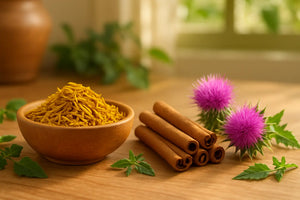
Berberine is the active alkaloid in Berberis aristata root, a plant used in Ayurveda for centuries under the name Daruharidra, traditionally associated with pitta balance and liver support. Modern research has identified its primary mechanism: AMPK activation. AMPK (AMP-activated protein kinase) is essentially a cellular energy sensor. When activated, it improves insulin sensitivity, reduces hepatic fat synthesis, and helps normalise fasting blood glucose.
A 2022 meta-analysis covering 22 randomised controlled trials (published in Frontiers in Pharmacology, 2,569 participants) found berberine supplementation was associated with meaningful improvements in fasting blood glucose, triglycerides, and liver enzyme markers in individuals with metabolic syndrome. A 2025 review in ScienceDirect (Asghari et al., cited by 12 studies as of publication) specifically highlighted berberine's effectiveness in enhancing insulin sensitivity and lipid metabolism in NAFLD patients [3].
One detail that all five top-ranking Indian SERP pages on berberine for fatty liver and blood sugar support India miss: berberine absorption is significantly improved when taken immediately after a meal rather than on an empty stomach, especially with a meal containing some healthy fat (like a small amount of ghee on dal or a few nuts with breakfast). The fat assists in absorption across the gut lining. For typical Indian meal patterns, this means taking your Gluco Wise capsule right after your morning meal and right after dinner, not before.
Milk Thistle (Silymarin)
Silymarin, the active complex in Milk Thistle seed extract, is one of the most studied hepatoprotective (liver-supportive) plant compounds globally. It works by stabilising liver cell membranes, reducing oxidative stress, and supporting the liver's natural regeneration process. For someone with grade 1 fatty liver who also has mildly elevated ALT or AST, Milk Thistle is a logical addition to a daily support routine [4].
Ceylon Cinnamon (Dalchini)
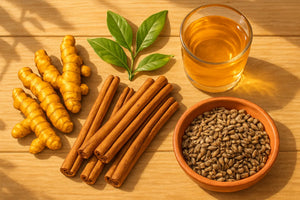
Not all cinnamon is equal. The common cassia cinnamon in most Indian kitchens contains significant coumarin, which in high daily doses can stress the liver, the opposite of what you want when supporting fatty liver. Ceylon cinnamon has negligible coumarin and has been shown to support healthy fasting blood sugar and improve post-meal glucose response. It is a practical, gentle addition to daily metabolic support [5].
Learn more: Berberis Aristata (Daruhaldi): How Berberine Supports Liver, Sugar, and More | Milk Thistle India: What is Silymarin and Why It's Good for Your Liver? | Ceylon Cinnamon vs Regular Cinnamon: Why It Matters for Metabolic Health
How to Take Gluco Wise With Indian Meals
Take 2 capsules daily: one after your morning meal (breakfast or mid-morning meal) and one after dinner. "After dinner" for many urban Indians means 9–10 PM. That is fine. The key is taking it with food, not on an empty stomach, and staying consistent. Results from berberine-based supplements typically require 8–12 weeks of consistent use to show up meaningfully in blood markers.
If you take metformin, statins, or any thyroid medication (levothyroxine is common in Indian women, especially post-30), space Gluco Wise at least 2 hours apart from those medications. Always consult your doctor before adding any supplement to an existing prescription routine.
Ouora QnA: Fatty Liver and Gluco Wise in Indian Adults
Q: My ultrasound says "grade 1 fatty liver." My doctor said just lose weight. Should I also consider a supplement?
A: Grade 1 is early. Diet and movement are non-negotiable. A supplement like Gluco Wise can support the process by targeting blood sugar and liver function simultaneously, but it works alongside those changes, not instead of them. Discuss with your doctor, especially if you are on any existing medication.
Q: Fatty liver mein kya khana chahie?
A: Prioritise whole grains (brown rice, jowar, bajra over white rice and maida), dal, sabzi cooked in moderate oil, curd, and seasonal fruits. Reduce refined sugar, fried snacks, packaged biscuits, and aerated drinks. Interestingly, plain black coffee without sugar or cream has shown associations with lower liver inflammation markers in observational studies. A small amount of ghee daily is not the enemy. Excess refined carbohydrates and trans fats are.
Q: Can fatty liver and pre-diabetes both be addressed together?
A: Yes, and they often need to be. The fatty liver blood sugar connection India clinicians discuss is essentially a two-way street. Improving insulin sensitivity with berberine supports both. That is why Gluco Wise is designed to address metabolic health broadly, not just one marker in isolation [6].
Q: Is Gluco Wise safe during Diwali or festive eating cycles?
A: Festive periods are exactly when consistent supplementation matters most. Increased sweets, fried snacks, and erratic meal timing create a metabolic spike. Continuing Gluco Wise through Diwali or Eid does not compensate for three weeks of mithai, but it does keep the daily support baseline consistent. Keep taking it. Adjust your food choices where you can.
Q: Who should NOT take Gluco Wise?
A: Pregnant or breastfeeding women should not take Gluco Wise without first consulting a registered doctor or qualified Ayurvedic practitioner. People on blood-thinning medication, immunosuppressants, or chemotherapy should seek medical advice before use. If you have been diagnosed with advanced liver disease (beyond grade 1–2 NAFLD), a hepatologist's guidance is essential before adding any supplement.
Natural Support Routine for Fatty Liver in Indians
30 days
In the first 30 days, focus on building the habit. Take Gluco Wise consistently after both meals. Begin tracking your food patterns, not obsessively, but enough to notice where excess sugar and refined carbs are entering your day. Start a 20-minute evening walk, even just around your building or colony. Your energy may feel slightly more stable as blood sugar swings reduce. No dramatic changes expected in lab markers yet. This is the foundation phase.
60 days
By 60 days, many users report improved post-meal energy, less mid-afternoon drowsiness, and more stable appetite. If you were having fasting blood sugar in the 100–115 range, this is when some people start seeing it inch downward. Liver enzymes, if they were mildly elevated, may begin normalising. This is also when the Milk Thistle component has had enough time to contribute meaningfully to liver cell support. Keep your movement routine going. Add a second walk if possible.
90 days
At 90 days, consider a follow-up HbA1c and liver enzyme panel. This gives you objective data to assess whether the combination of lifestyle changes and Gluco Wise supplementation is making a measurable difference. Grade 1 fatty liver can show improvement on repeat ultrasound at 3–6 months with consistent lifestyle correction. Gluco Wise is designed to support that process over this window. Share your results with your doctor before deciding on next steps.
Try Gluco Wise Blood Sugar Support →Read More on Liver & Metabolic Health at Daily All Day
- Milk Thistle India: What is Silymarin and Why It's Good for Your Liver?
- Berberis Aristata (Daruhaldi): How Berberine Supports Liver, Sugar, and More
- Ceylon Cinnamon vs Regular Cinnamon: Why It Matters for Metabolic Health
- Why Do Indian Men Get Skinny-Fat at Desk Jobs?
- Methi (Fenugreek): Benefits for Gut Health and Metabolic Support
Frequently Asked Questions
Should I take Gluco Wise before or after Indian meals, and does meal composition matter?
Take Gluco Wise after meals, not before. Berberine absorbs better with food, particularly when the meal contains a small amount of healthy fat, such as a teaspoon of ghee on dal, a few walnuts, or curd with your rice. For typical Indian eating patterns, after breakfast and after dinner work well. Avoid taking it on an empty stomach, as it may cause mild nausea in some people.
I take thyroid medication (levothyroxine) daily. Can I also take Gluco Wise?
Berberine can potentially interact with how the body metabolises certain medications, including thyroid hormone. If you take levothyroxine or any thyroid-related medication, consult your doctor before starting Gluco Wise. As a general precaution, leave at least a 2-hour gap between your thyroid medication and any supplement. Thyroid conditions are common in Indian women post-30, so this is a genuinely important consideration, not a generic disclaimer. For more on thyroid and metabolic health, see our thyroid support guide for Indian women.
Gluco Wise says FSSAI registered. Is it different from an AYUSH-approved medicine? Which is better?
These are two separate regulatory categories in India. Gluco Wise is an FSSAI-registered dietary supplement, regulated as a food product for safety and quality. AYUSH-licensed products go through a traditional medicine licensing pathway under the Ministry of AYUSH. Neither is superior in every case; they serve different purposes. As a dietary supplement, Gluco Wise is not positioned as a medicine and makes no claims to treat or diagnose any condition. It supports healthy daily metabolic function. If you are seeking treatment for a diagnosed condition, consult a registered medical doctor or qualified Ayurvedic practitioner.
How long before I see results in my blood sugar or liver enzyme reports?
Berberine-based supplements typically require 8–12 weeks of consistent daily use before meaningful changes appear in blood markers like fasting glucose, HbA1c, or ALT/AST. Some people notice subjective improvements in energy and post-meal steadiness within 30 days. For objective liver enzyme and blood sugar data, plan a retest at 90 days. Results depend significantly on whether dietary changes and movement are happening alongside supplementation.
Does berberine behave differently in summer versus monsoon months in India?
No direct seasonal dose adjustment is required for berberine. However, your lifestyle context changes across seasons, and that affects how well any supplement works. Monsoon months typically reduce physical activity and increase comfort food consumption for many Indians, which can raise hepatic fat load. Winter