Table of Contents
- A Punjabi Story: Where Did All the Nutrition Go?
- Why Are Vitamin D and Protein Deficiency So Common?
- North India and Vitamin D Deficiency: What the Research Shows
- Protein: The Missing Link in a 'Rich' Diet
- Hidden Factors That Make Deficiencies Worse
- Ingredient Deep Dive – Daily All Day Vita Blend
- What Does the Internet Say? (Quora Q&A)
- Frequently Asked Questions
A Punjabi Story: Where Did All the Nutrition Go?
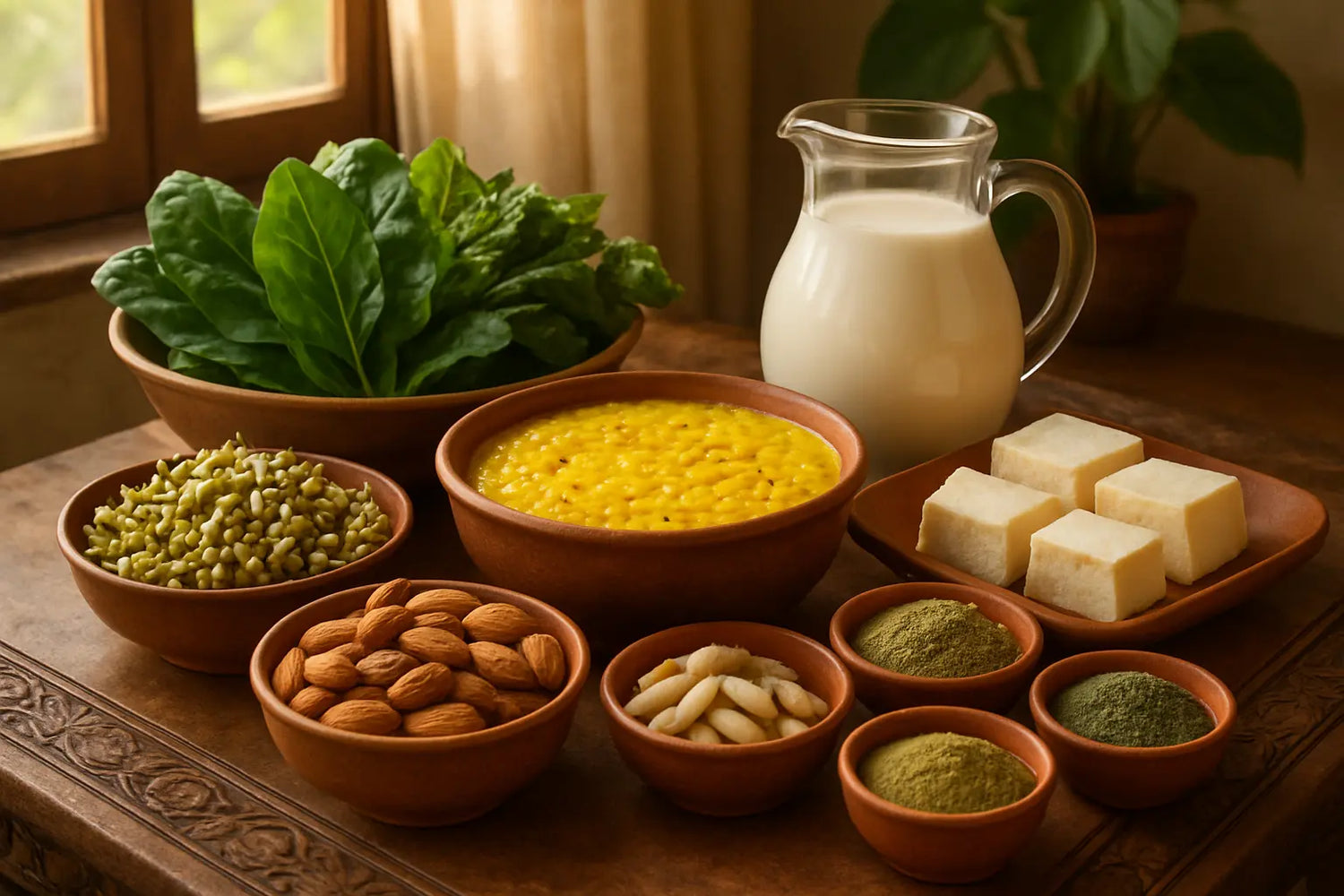
Picture a joyful Punjabi family in a bustling village. Their plates are full—dal, paratha, paneer, thick kheer, and fresh lassi. But deep inside, most members feel tired, bones ache, and sometimes the skin breaks out with acne. It’s strange, right? But this is the hidden reality of vitamin D and protein deficiency in Punjab, even though the diet looks rich and colorful! If you wonder why these 'sunlight vitamin', 'ergocalciferol', and 'protein' issues are so common, keep reading this simple guide.
Why Are Vitamin D and Protein Deficiency So Common?
- Sunlight Vitamin (Vitamin D) Deficiency: Punjab gets loads of sunshine. But busy lives, long work hours indoors or covered clothing, pollution and sun-avoidance mean less skin exposure to sun. The sun triggers vitamin D3 (cholecalciferol) production—a must for bones, immunity, and energy.
- Protein Deficiency: Punjabi cuisine is fiber-rich and tasty, but it depends heavily on cereals (roti, rice). These supplies calories but often lack complete proteins (all needed amino acids). Plant proteins usually miss one or more key amino acids (like lysine), unless smartly combined.
North India and Vitamin D Deficiency: What the Research Shows
New research finds vitamin D3 deficiency in India is super common—even in sunny regions[3]. Here’s why:
- Main sources of vitamin D are animal-based foods (egg yolk, cod liver oil, fatty fish)—these are rarely eaten in Punjabi vegetarian diets.
- Foods rich in vitamin D3 for vegetarians, like fortified milk or cereals, are not always part of traditional home cooking.
- Darker skin makes vitamin D production from sunlight slower (melanin blocks UV-B rays), so people with brown skin need extra sun time.Read more on Quora
- Many families also avoid direct sun (to stay cool, cultural reasons, avoid tan), which limits production of the 'sun vitamin'.
- Lack of vitamin D fortified foods in daily meals.Read more on Quora
Symptoms of Vitamin D Deficiency:
- Bone pain, weak muscles, getting sick often
- Low mood or energy
- Thin or weak hair, brittle nails
Protein: The Missing Link in a ‘Rich’ Diet
- Pulses, chana, dal, paneer add protein, but many families still eat less than the daily needed amount.
- Many traditional meals pair cereal with dal, but the quality of plant protein is lower than animal protein.
- 73% of Indians are protein-deficient despite eating food that fills their stomach, says Quora.
- Protein is essential for muscle strength, growth, hormones, and healing.
- Young children, elders, and women of child-bearing age are most at risk, especially when their diet is mostly grain-based[2].
Signs of Protein Deficiency:
- Thin, weak hair, frequent sickness
- Lack of muscle, slow healing from wounds
- Feeling tired or slow growth in children
Hidden Factors That Make Deficiencies Worse
- High Refined Oil & Deep Fried Snacks: Weakens absorption of fat-soluble vitamins like vitamin D. Learn more how Indian food oils can cause omega imbalance here.
- Cooking Styles: Overcooking, frying, using too much spice—these reduce actual vitamins left on your plate. See how Indian cooking methods affect vitamin levels here.
- Phytic Acid in Cereals: Dal, beans, and grains contain phytates that block some mineral and protein absorption.
- Limited Dairy Intake: Urban families drink less milk/yoghurt, missing a classic vegetarian source of vitamin d and protein.
- No Fortified Foods: Lack of foods enriched with vitamin D or protein. Read about this on Quora here.
Ingredient Deep Dive – Daily All Day Vita Blend
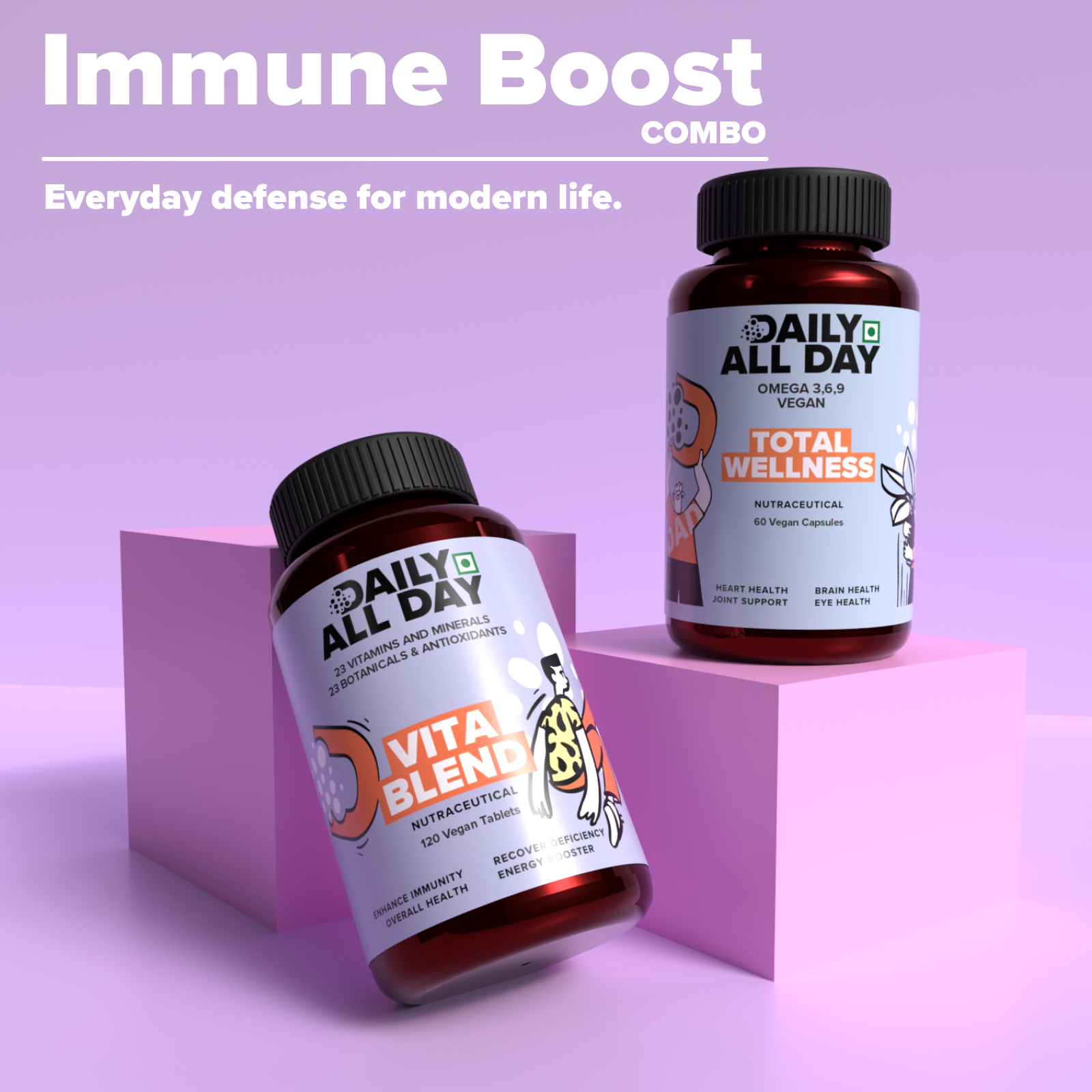
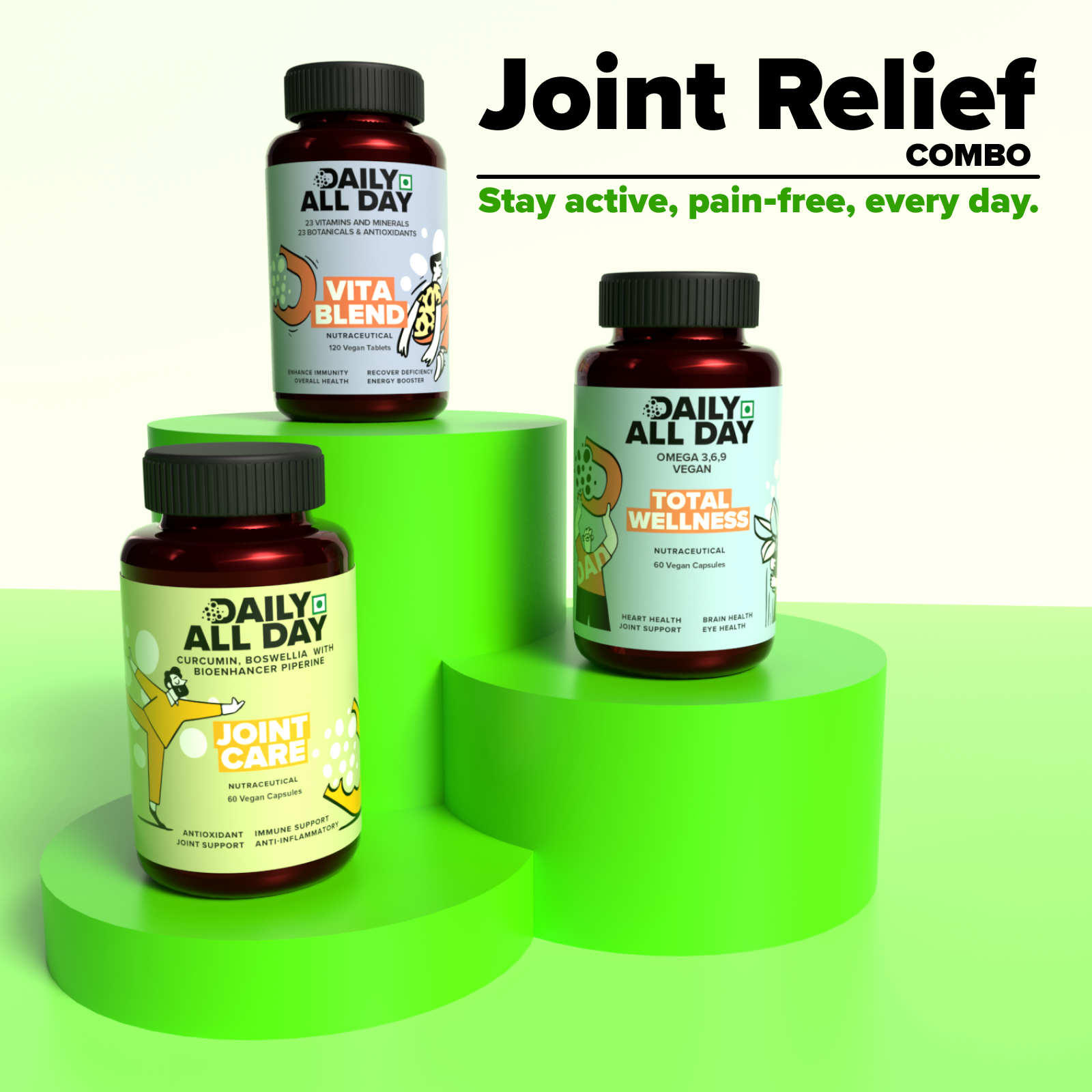
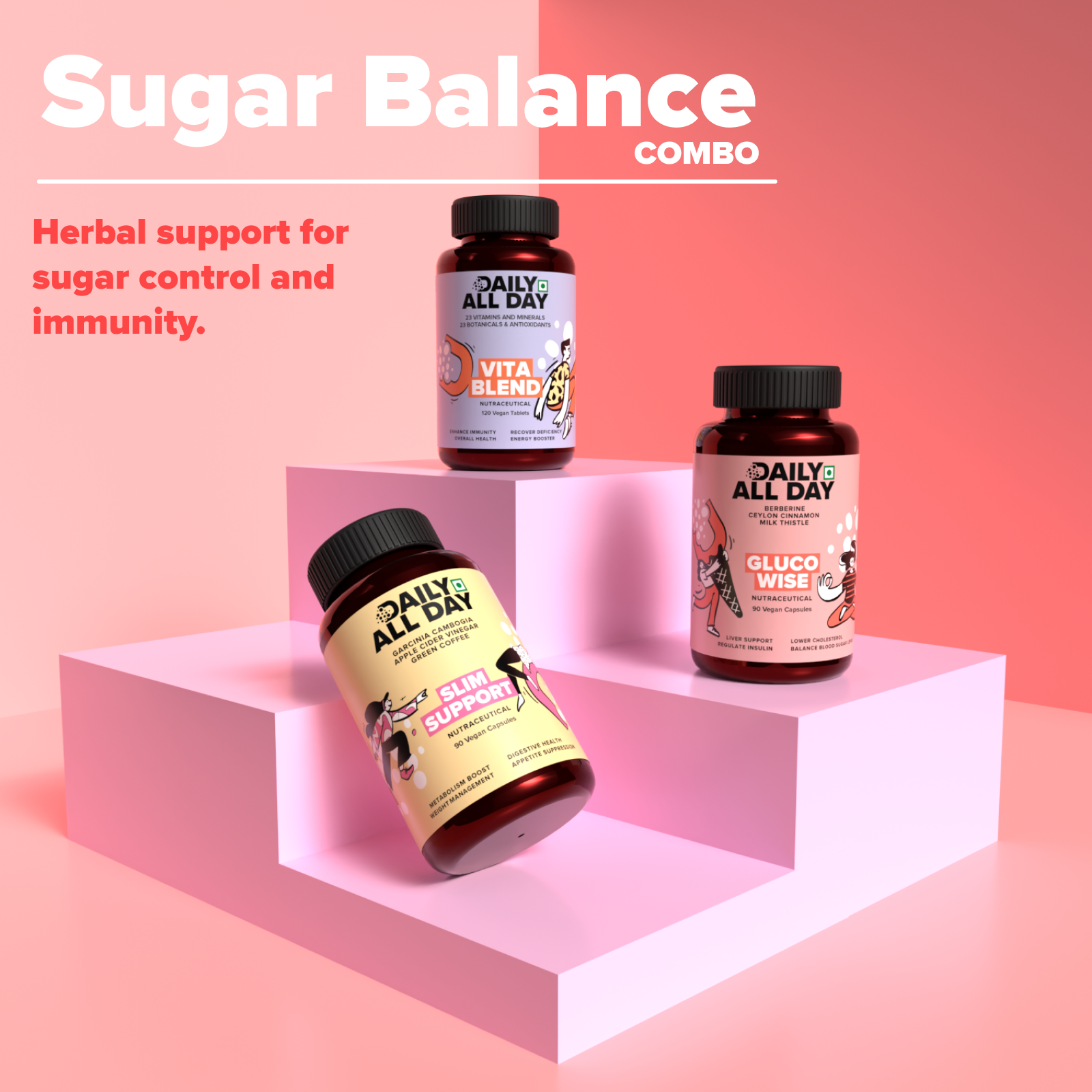
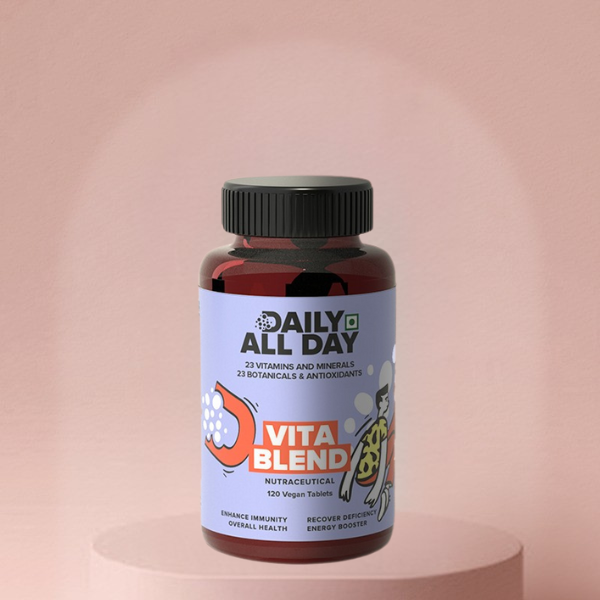
Daily All Day Vita Blend is made for modern Indian nutrition needs. Here’s why this blend is special:
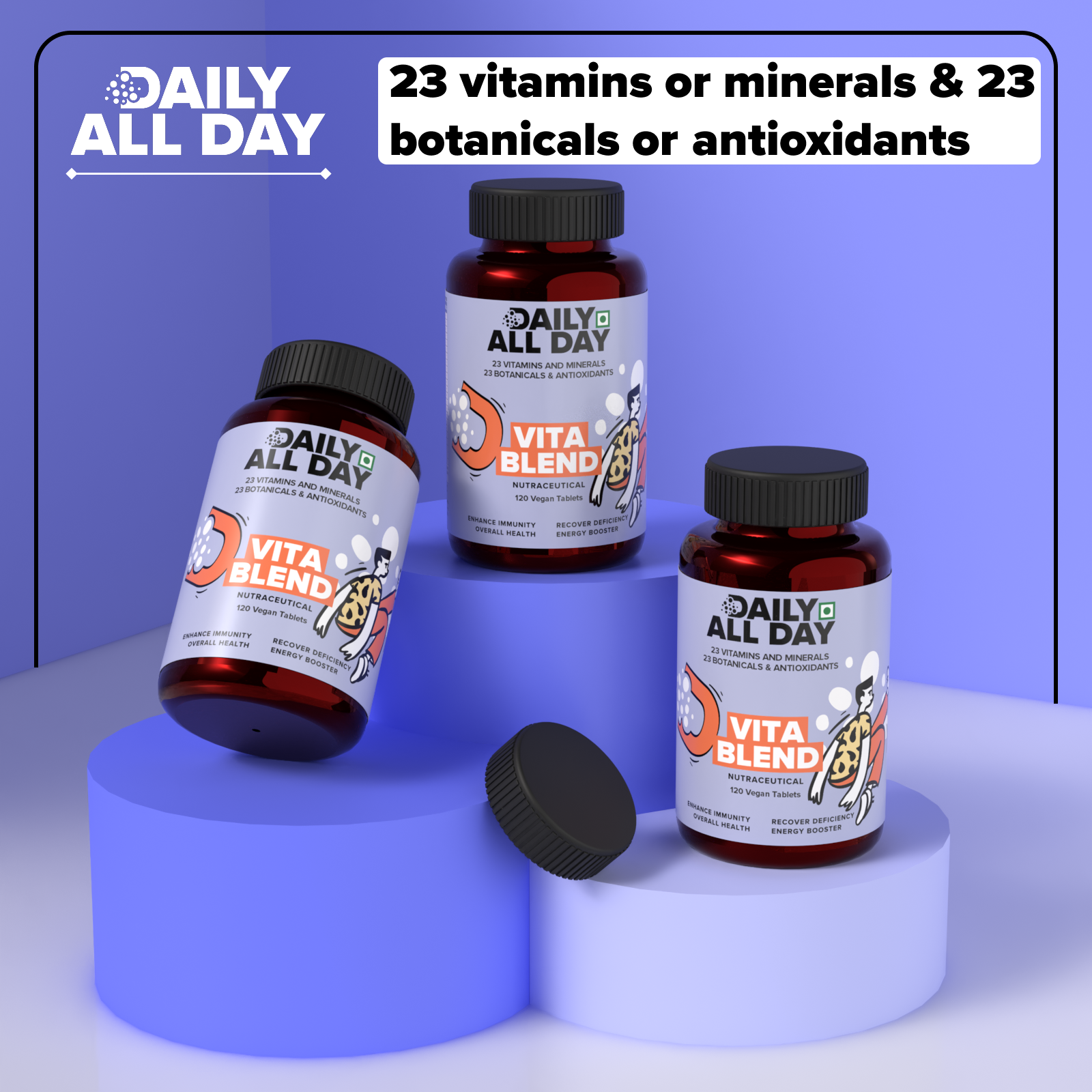
- 23 Vitamins & Minerals: Vitamin D3 (cholecalciferol) 600 IU per serving, plus A, B6, B12, K2 (for bone strength), magnesium, zinc, iron.
- 40+ Powerful Nutrients: Rare Ayurvedic herbs—moringa (high protein & calcium), ashwagandha, ginseng, curcumin, and others—excellent for strength, immunity, and energy.
- Vegetarian & Safe: No toxins, artificial stuff, or animal sources. Suits all vegetarian families.
- Omega 3, 6, 9 + Antioxidants: For good heart, brain, and skin health.
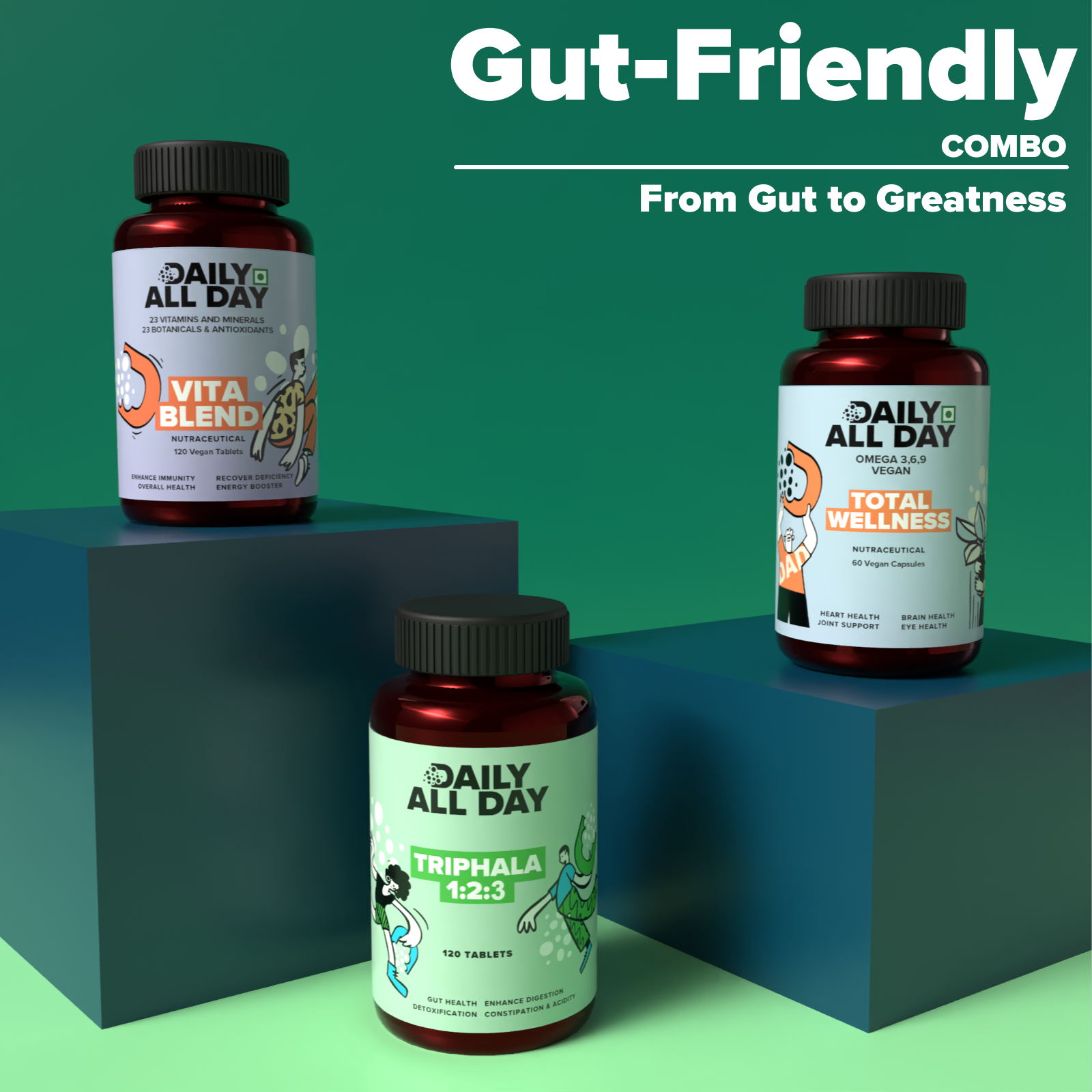
- Gut Health Promoters: Fenugreek, ginger, tulsi, triphala, and giloy—support better vitamin absorption. Learn more about how giloy supports health here.
Why This Blend?
- If you struggle with low energy, muscle weakness, or dull skin, this blend can fill real gaps, especially for vegetarians and those with a weak/small body frame.
- For acne and skin issues: B complex and antioxidants help clear skin. If you want holistic and ayurvedic blends: omega oils, sunflower phospholipids, and super herbs build long-lasting strength.
How to Use?
- 2 tablets daily after meals, morning and evening. Consistency is the key for best results (at least 6-8 weeks).
- Safe RDA-approved levels, lab-tested, FSSAI, and GMP certified.
Want to see a head-to-head ingredient breakdown? Check the full label here.
What Does the Internet Say? (Quora Q&A)
- Most North Indians are vitamin D deficient because:
- More vegetarians, less vitamin D in the diet
- Minimal intake of vitamin D-fortified foods
- Darker skin slows vitamin D production in sun
- Read what nutritionists say on Quora
- Is protein deficiency real?
- 73% Indians are protein-deficient, even if they eat enough calories
- Why? Not enough quality protein in traditional diets
- Read solutions and advice on Quora
- Which is the most common vitamin deficiency?
- Vitamin D ranks highest, mostly due to limited animal products and sun exposure
- Check out more at Quora
- What’s the max deficiency found in Indian people?
- Again, vitamin D—due to less animal food, and most families not eating fortified foods
- More details at Quora
Frequently Asked Questions
-
What vegetarian foods are rich in vitamin D (vitamin d foods vegetarian)?
Most natural plant foods have little vitamin D. Useful sources are fortified foods (like milk, orange juice, cereals), mushrooms exposed to sunlight, and supplements with ergocalciferol (vitamin D2) or cholecalciferol (vitamin D3). -
Does vitamin D from sunlight (sunlight vitamin) work with darker skin?
Yes, but people with dark skin need more time in the sun for enough vitamin D. About 30–60 minutes, 2–3 times a week, with arms and legs exposed, is ideal—but not always possible due to work, pollution, or cultural reasons. -
What are quick vegetarian protein sources?
Paneer, curd, soya chunks, beans, pulses (dal), sprouted moong, nuts, and seeds. It’s best to mix legumes and cereals for better complete protein. -
How does Daily All Day Vita Blend help?
It packs vegan vitamin D3, B12, high protein herbs like moringa, and digestive support so that nutrients are well-absorbed, supporting your energy, strength, and immunity every day. -
Can children and teens use this blend?
Generally safe for teens if dosed as per the label and doctor’s advice—but not for children below 12 years. Pregnant/lactating women should consult a doctor first. For more about teen deficiencies, read this blog.
Want to read about Ayurvedic herbs and daily nutrition? Check out articles on herbs in modern diets and high carb diets impact on nutrition.

Conclusion: Filling the Gaps for Punjab’s Health
Even though the Punjabi diet is colorful and nourishing, vitamin D and protein deficiency haunt many. Limited sunlight exposure, a vegetarian lifestyle that lacks vitamin D-rich foods, high-cereal meals with low-quality protein, and cultural food practices all play a part. These surprising nutrition gaps lead to issues like weak bones, low energy, and poor immunity.
Adding proven solutions—like more time in morning sunlight, vitamin D fortified foods, and a focus on protein-rich alternatives—can make a big difference. Ayurvedic and modern science are both pointing to multivitamin blends like Daily All Day Vita Blend for consistent daily nutrition, especially for vegetarians. Its unique combination of over 40 nutrients and herbs like moringa, ashwagandha, and vitamin D3 (cholecalciferol) bridges the gap effectively.
Ignoring these hidden deficiencies is risky, especially for growing children and busy adults. Taking small mindful steps, along with a supplement strategy, can improve overall wellness, strength, immunity, and energy. This approach is now strongly recommended by researchers for maternal and neonatal health in Indian communities as well[3]. Multiple studies uphold the importance of a balanced micronutrient intake and protein improvement for a healthier future[1][2]. Choose smarter; fill nutrition gaps and shine with good health!