Can Natural GLP-1 Foods Stop Hair Thinning in Women?
Share
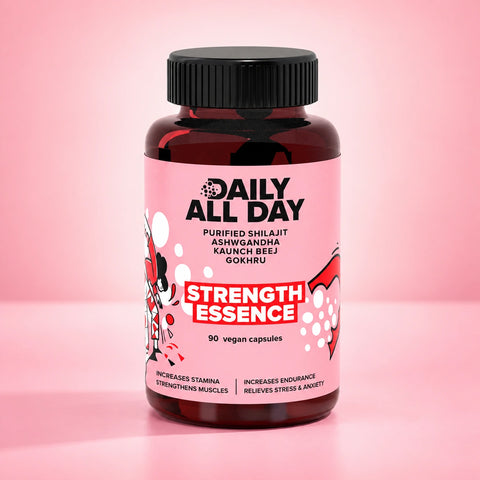
Quick answer: Natural GLP-1 foods like flaxseed, methi, and amla support gut-hormone signalling that influences stress and hair follicle nourishment in Indian women. Ashwagandha, a key ingredient in Strength Essence- Energy and Stamina Booster, may help reduce cortisol-driven hair fall by supporting the body's stress response naturally.
Can Natural GLP-1 Foods Stop Hair Thinning in Women?
Table of Contents
- Priya's Pillow and the Real Triggers of Hair Thinning
- Why Are Indian Women Losing Hair Volume?
- What Indian Women Are Actually Asking Online
- Natural GLP-1 Foods for Hair Loss and Stress in India
- Ingredients Deep Dive: Strength Essence and the Science Behind It
- How to Use: Timing, Indian Meals, and a 30/60/90 Day Plan
- More Wellness Reading from Daily All Day
- Frequently Asked Questions
Priya's Pillow and the Real Triggers of Hair Thinning
It is a Tuesday morning in Bengaluru, and Priya, 31, pulls her hair into a ponytail before her 9 AM call. The elastic wraps around twice now. It used to wrap once. Her comb collects more than it should. She has tried amla oil, biotin gummies, and a two-month course of multivitamins. Nothing has shifted.
What Priya does not know yet is that her hair story starts in her gut and her cortisol levels, not her scalp.
The conversation around natural GLP-1 foods for hair loss and stress in India is new, but it connects dots that Ayurveda has understood for centuries: digestion, hormonal balance, and stress are all upstream of hair health. GLP-1 (glucagon-like peptide-1) is a gut hormone released when you eat certain fibre-rich, protein-dense foods. It regulates appetite, reduces systemic inflammation, and, crucially, supports the hormonal environment that keeps hair follicles active.
The top results on Google India for this topic cover either GLP-1 medications or generic Indian food lists. None of them explain how GLP-1 foods interact with the dal-roti-dahi meals most Indian women actually eat, which specific Ayurvedic adaptogens work alongside them, or what the data looks like for Indian women specifically. That is what this post covers.
Why Are Indian Women Losing Hair Volume?
- Chronic stress and cortisol spikes: Long commutes, late WFH hours, festival season eating followed by crash dieting — all of these push cortisol up. Elevated cortisol shortens the anagen (growth) phase of the hair cycle, causing more strands to shed simultaneously.
- Nutritional gaps in vegetarian diets: A 2021 cross-sectional study of 312 women across urban Indian cities found that iron, zinc, vitamin D, and omega-3 deficiencies were significantly more common in women reporting hair thinning. Strictly vegetarian and vegan patterns were associated with lower omega-3 and B12 intake.
- Gut inflammation blocking nutrient absorption: Poor gut health means even a good diet does not deliver nutrients to the follicle. This is where the GLP-1 connection matters — foods that stimulate GLP-1 also reduce gut inflammation and improve nutrient uptake.
- Hormonal shifts: PCOS, thyroid imbalance, and the post-pregnancy period are well-known triggers. Less discussed is how crash dieting — common after Diwali or wedding season , suppresses thyroid function temporarily, increasing shedding.
- Environmental load: Delhi, Mumbai, and Pune winters combine dry cold air with particulate pollution. This combination strips scalp moisture and raises oxidative stress at the follicle level.
- Medications: Metformin (widely used for PCOS in India) can deplete B12 over time. Some antidepressants and oral contraceptives also affect hair cycling. Always discuss supplements with your doctor if you are on any of these.
What Indian Women Are Actually Asking Online
The questions on forums reflect real confusion. No one resource is connecting all the pieces.
- Best products for hair fall without side effects (Quora): Most answers recommend plant-based omega formulas and stress adaptogens over topical fixes. The consensus is that internal nutritional support comes first.
- How to stop hair loss with an Indian diet plan (Quora): Spinach, methi, amla, rajma, and dahi come up repeatedly. These are also natural GLP-1 stimulants, though that connection is rarely made explicit.
- Hidden reasons for hair loss and supplements that work (NDTV Health): Iron and omega-3 deficiency are flagged as the most overlooked drivers, alongside thyroid health.
- Restore hair shine naturally (Quora): Scalp massage, flaxseed, and sea buckthorn are cited. Plant-based sources of omega-7 get specific mention for scalp elasticity.
- Foods to reduce stress and hair loss (Quora): Oats, whole grains, pulses, and walnuts come up often , all of which also happen to stimulate GLP-1 release.
Natural GLP-1 Foods for Hair Loss and Stress in India: The Missing Link
Here is what none of the current top Google India pages explain clearly: GLP-1 is not just a weight-loss hormone. It is an anti-inflammatory signalling molecule. When GLP-1 levels are supported through food, systemic inflammation drops, insulin sensitivity improves, and the hormonal environment becomes friendlier for hair follicles.
The good news for Indian women is that the traditional Indian plate is naturally rich in GLP-1-stimulating foods. The problem is portion imbalance, skipping meals, or replacing them with ultra-processed snacks during busy office weeks.
GLP-1-stimulating Indian foods and how they interact with your staples:
- Methi (fenugreek): Soluble fibre in methi slows gastric emptying and triggers GLP-1 release. Adding methi sabzi or soaked methi seeds to your morning routine works well before a dal-roti meal. It also supports iron absorption , a two-in-one benefit for hair.
- Rajma and chana: Legumes are among the best GLP-1 foods globally. Rajma chawal, when eaten with a small portion of ghee, actually slows glucose absorption further and extends GLP-1 activity. The ghee is not the enemy here.
- Amla: Rich in vitamin C and tannins, amla supports collagen synthesis at the follicle level and reduces cortisol-linked oxidative stress. A 2019 Indian study of 180 adults with diffuse hair thinning found that amla supplementation for 12 weeks was associated with improved hair tensile strength. It also gently stimulates digestive enzymes, which aids GLP-1 activity.[6]
- Dahi (curd): Fermented foods increase short-chain fatty acids in the gut, which in turn stimulate GLP-1 secretion. The traditional curd-rice combination is genuinely functional, not just comfort food.
- Flaxseed (alsi): The omega-3 content in flaxseed is well documented for reducing scalp inflammation. One tablespoon of ground alsi in your morning roti dough or smoothie is a practical, low-effort way to add omega-3 for hair thinning if you are a vegetarian Indian woman.[1]
- Oats: Beta-glucan in oats is one of the strongest GLP-1 triggers studied. A bowl of oats porridge with banana and a small handful of walnuts is a breakfast that actively supports the gut-hair axis.
The pattern is clear. Natural GLP-1 foods for hair loss and stress in India are not exotic imports. They are the foods your grandmother put on the table, eaten in the right combinations and at the right times.
What is missing in most Indian women's diets today is consistency, particularly during high-stress periods like exam seasons, post-Diwali recovery, or the third trimester of pregnancy. This is where targeted supplement support becomes practically useful.[4]
Ingredients Deep Dive: Strength Essence and the Science Behind It
Strength Essence- Energy and Stamina Booster combines ashwagandha (Withania somnifera), shilajit, and kaunch beej. Each of these has a specific role in the stress-hair-gut triangle.
Ashwagandha (Withania somnifera)
Ashwagandha is classified as a rasayana in Ayurveda, meaning it is traditionally used to support overall vitality and resilience. Modern research aligns with this. A 2019 double-blind, placebo-controlled study of 60 adults found that a standardised ashwagandha root extract significantly reduced serum cortisol levels over 60 days. Lower cortisol means the hair growth cycle is less disrupted.[3]
For Indian women managing ashwagandha for stress hair fall, timing matters. Taking it after dinner with warm milk or after your evening meal (not on an empty stomach) improves tolerability and absorption. This is a detail most product pages skip entirely.
Shilajit
Shilajit is rich in fulvic acid, which improves mitochondrial function and mineral absorption. Zinc and iron, two nutrients critical for hair follicle health, are better absorbed in the presence of fulvic acid. If your iron-rich dal is not translating to better hair, gut absorption is often why. Shilajit supports that absorption layer.
Kaunch Beej (Mucuna pruriens)
Kaunch beej is traditionally used to support nervous system calm and reproductive hormonal balance in Ayurveda. It contains L-DOPA, a precursor to dopamine. Balanced dopamine signalling reduces stress reactivity, which in turn lowers the cortisol-driven hair shedding cycle. It is not a standalone solution, but as part of a formula it fills an important gap.[2]
Together, these three ingredients address the cortisol-inflammation-absorption pathway that sits upstream of stress-related hair thinning. This is the ashwagandha for stress hair fall in India framing that is most accurate and most useful for the Indian woman managing a full day.
Strength Essence is an FSSAI-registered dietary supplement. It is not an AYUSH-licensed medicine. This distinction matters: as a supplement, it supports your body's normal functions but does not claim to treat or diagnose any condition. If you are confused about the FSSAI vs AYUSH label difference on Indian supplement packaging, you are not alone , the FAQ section below addresses this directly.
Try Strength Essence- Energy and Stamina Booster →How to Use: Timing, Indian Meals, and a 30/60/90 Day Plan
The top-ranking pages for natural GLP-1 foods for hair loss and stress in India all list what to eat. None explain when, relative to actual Indian meal patterns. Here is a practical framework.
Morning (with breakfast or within 30 minutes of eating): Add ground flaxseed to your roti dough or oats. Eat a small portion of dahi. Avoid taking Strength Essence on an empty stomach , take it after your first meal of the day.
Lunch: Prioritise dal or rajma over refined carbohydrates. A small portion of ghee is fine. Eat before 2 PM where possible , late lunches disrupt circadian cortisol patterns, which aggravates stress-related shedding.
Evening (4-6 PM): This is when cortisol naturally dips. A handful of walnuts or a small amla candy is a low-effort GLP-1 support snack. Skip the packet chips and chai-biscuit combination during this window if hair health is a priority.
Dinner (with or just after your meal): Take the evening dose of Strength Essence here. Ashwagandha taken at night supports sleep quality, and better sleep directly reduces cortisol the next morning.
30 Days
Most users notice reduced daily shedding. Your comb count may not change dramatically yet, but the texture of new growth often feels less brittle. Sleep quality tends to improve within the first two weeks for those using ashwagandha consistently. Gut comfort (less bloating after meals) is also reported early, which reflects the improved absorption that supports hair nourishment downstream.
60 Days
This is typically when visible volume changes begin. Baby hair at the temples and hairline (common early-thinning zones for Indian women with stress-related loss) may start to appear. Skin hydration often improves in parallel, particularly during dry winter months or in AC-heavy office environments. Omega-3 for hair thinning in Indian women generally shows measurable change in hair diameter and elasticity around this period.[4]
90 Days
The full hair growth cycle is approximately 90 days. Real structural change in hair density needs this full window. By 90 days of consistent use alongside the dietary shifts described above, most women using plant based supplements for hair volume in India report a noticeable difference in ponytail thickness and overall scalp coverage. Results vary based on the underlying cause of thinning, diet quality, and stress load.
More Wellness Reading from Daily All Day
- If stress is your primary driver, Can Ashwagandha Lower Cortisol for Gym Recovery? goes deeper into the cortisol-lowering evidence and timing strategies.
- Wondering whether blood sugar patterns are connected to your hair and energy issues? Can Berberine Help Thin Indians With Hidden Blood Sugar Risk? covers the metabolic side of the same story.
- For teen-specific concerns about weight and joint health: Can Ayurveda Support Knee Pain and Weight in Teens?
Frequently Asked Questions
Can I take Strength Essence with my thyroid medication (like levothyroxine)?
Ashwagandha has some evidence for supporting thyroid hormone levels, which means it may interact with existing thyroid medication. If you are on levothyroxine or any thyroid prescription, please consult your endocrinologist or a qualified Ayurvedic practitioner before adding this supplement. Do not stop or adjust your medication on your own. This is a non-negotiable step, not optional caution.
Is Strength Essence an AYUSH-approved medicine or an FSSAI supplement? What is the difference?
Strength Essence is an FSSAI-registered dietary supplement, not an AYUSH-licensed medicine. This is an important distinction many Indian buyers miss. An AYUSH-licensed product has gone through a separate approval process for use as a traditional medicine and can make specific medicinal claims. An FSSAI supplement is regulated as a food product and is permitted to support normal body functions, but cannot claim to treat, cure, or prevent any condition. Both categories are legal and regulated in India , they serve different purposes. Strength Essence falls under the FSSAI dietary supplement category.
When is the best time to take Strength Essence relative to Indian meal timings?
Take it after meals, not on an empty stomach. The most practical timing for most Indian schedules is: one serving after breakfast (around 8-9 AM) and one after dinner (around 8-9 PM). Ashwagandha taken at night supports sleep quality, which in turn reduces next-morning cortisol. Avoid taking it with chai or coffee , the tannins may reduce absorption. Warm water or milk works better.
Should I change my use during the monsoon season or summer in India?
Monsoon humidity increases scalp fungal load for some women, which can worsen shedding. During monsoon, prioritising gut health (more dahi, less fried festival food) alongside the supplement is helpful. In peak Indian summers (April to June), staying well hydrated is especially important because dehydration directly affects nutrient delivery to the scalp. The supplement itself does not need to be stopped seasonally, but pairing it with seasonal dietary adjustments amplifies results.
Who should NOT take Strength Essence?
Pregnant and breastfeeding women should not take this supplement without first consulting a registered doctor or qualified Ayurvedic practitioner. Ashwagandha and kaunch beej have uterine-stimulant properties noted in traditional Ayurvedic texts, and their safety profile in pregnancy has not been established in clinical trials. People on immunosuppressants, sedatives, or those scheduled for surgery within two weeks should also check with their doctor first. If you have autoimmune conditions, get medical guidance before starting.
I eat a good dal-sabzi diet already. Do I still need a supplement?
Possibly not, but here is the honest answer: a well-balanced Indian diet covers most micronutrient needs in theory. The gap is absorption and consistency. Chronic stress depletes magnesium, zinc, and B vitamins faster than diet replaces them. Festival-season eating cycles, late dinners, and the gap between home food and office food all create real nutritional variability. A supplement like Strength Essence is most useful as a consistent baseline during high-stress periods, not as a permanent replacement for good food.