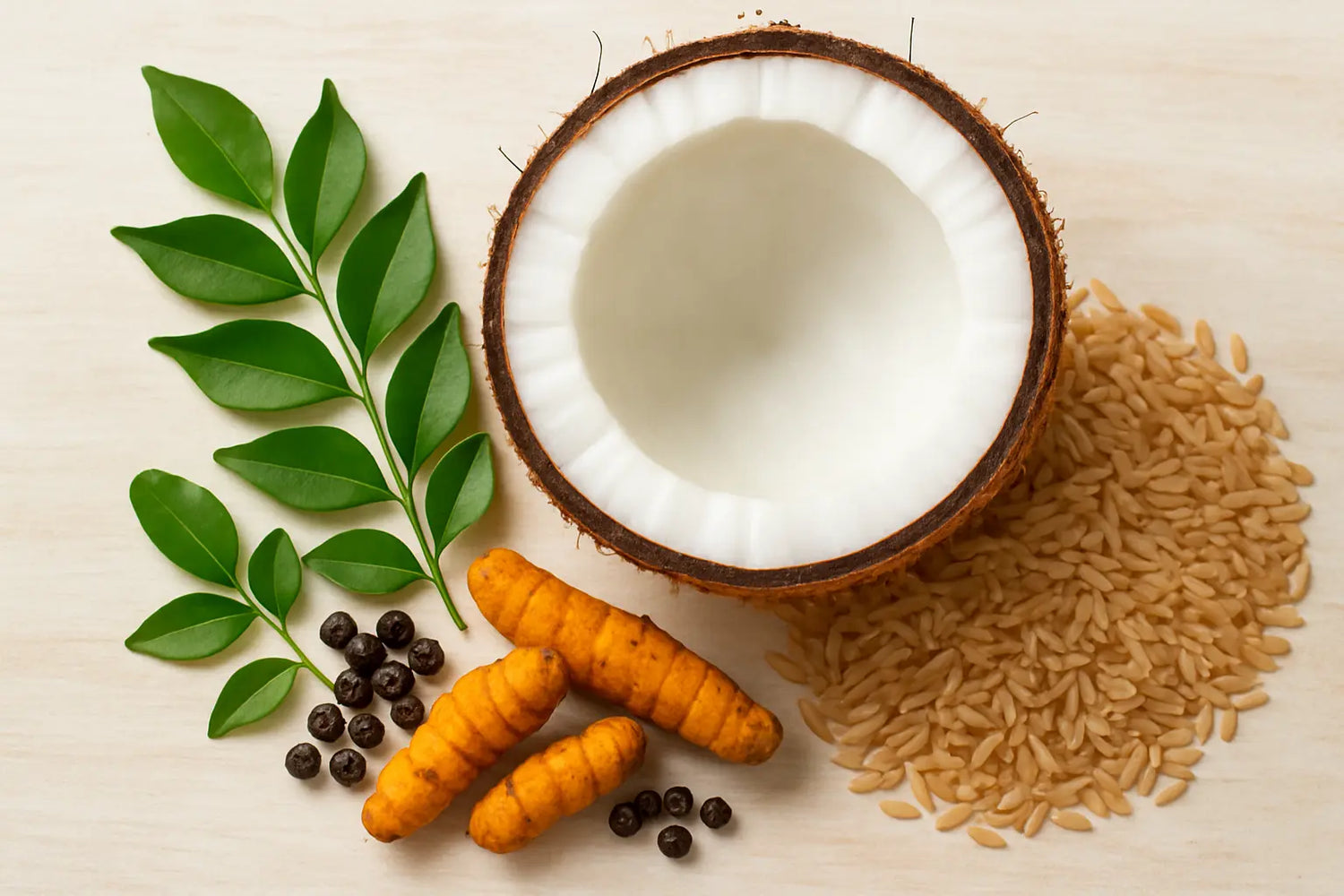
Imagine the lush green backwaters of Kerala, the gentle sway of coconut palms, and the incredible aroma of food being cooked in fresh coconut oil. It’s a picture of paradise. For anyone who has tasted Keralite cuisine, the taste of coconut is unforgettable. From the morning ‘puttu’ to the afternoon’s ‘avial’ and the evening’s fish curry, coconut is the star. But have you ever wondered if this heavy reliance on one ingredient could be a double-edged sword? Is Kerala’s high coconut-based diet impacting crucial nutrients like the Omega balance and Vitamin D levels in our bodies? Let's dive in and uncover the science behind this delicious dilemma.
Table of Contents
- The Coconut Conundrum: A Fat Story
- The Omega Balance Beam: Is It Tipping?
- The Sunshine Vitamin Paradox
- Ingredients Deep Dive: What's Really on the Plate?
- Insights from Quora: What People Are Asking
- Bridging the Nutritional Gap with Supplements
- Frequently Asked Questions
The Coconut Conundrum: A Fat Story
Coconut oil is the lifeblood of Kerala's kitchens. It’s used for frying, sautéing, and as a final flavourful garnish. But here’s the thing: coconut oil is made up of about 90% saturated fat. For decades, saturated fat got a bad rap, linked to heart problems and high cholesterol. However, recent science, including some news today, suggests it's more complicated. The saturated fats in coconut oil are mostly Medium-Chain Triglycerides (MCTs), which the body processes differently than the long-chain fats found in red meat. MCTs are more easily converted into energy.
But the real question isn't just about saturated fat. It's about what's missing. While coconut oil is a great energy source, it contains almost no omega-3 fatty acids or Omega-6 fatty acids. These are called 'essential fatty acids' because our bodies can't make them; we have to get them from food.
The Omega Balance Beam: Is It Tipping?
Think of Omega-6 and Omega-3 fatty acids as two kids on a seesaw. You need both, but in the right balance. Most modern diets are flooded with Omega-6 (found in vegetable oils like sunflower and soybean oil) and are very low in Omega-3. This imbalance can lead to inflammation, which is a root cause of many health problems, from joint pain to heart disease.
So, where does Kerala’s diet stand? A diet relying only on coconut oil could be problematic because it doesn't provide any Omega-3s. But here’s where the traditional Keralite diet shows its wisdom. The saving grace is fish!
Kerala, with its long coastline, has a diet rich in fatty fish like sardines, mackerel, and tuna. These fish are swimming with the best kind of Omega-3s: eicosapentaenoic acid (EPA) and docosahexaenoic acid (DHA). This high fish consumption acts as the perfect counterweight, supplying the essential Omega-3s that coconut oil lacks. It helps balance the seesaw, keeping inflammation in check and supporting brain and heart health. So, the combination of coconut oil and fish is a traditional pairing that makes a lot of nutritional sense.
The Sunshine Vitamin Paradox
Now, let's talk about Vitamin D, the 'sunshine vitamin.' Our bodies make it when our skin is exposed to sunlight. Given that Kerala is a tropical state with plenty of sunshine, you'd think Vitamin D deficiency wouldn't be an issue. But surprisingly, it is a growing concern across India, including in sunny states.
Why? Our lifestyles have changed. We spend more time indoors—in offices, schools, and homes. When we do go out, we often wear clothes that cover most of our skin or use sunscreen, which blocks the rays needed for Vitamin D production. The diet doesn’t help much either. Coconut, like most foods, contains virtually no Vitamin D. While some fatty fish and egg yolks have a little, it's often not enough to meet our daily needs. This deficiency can lead to weak bones, a weaker immune system, and fatigue.
Ingredients Deep Dive: What's Really on the Plate?
- Coconut & Coconut Oil: The star ingredient. High in energy-giving saturated fats (MCTs). However, it offers no Omega-3, Omega-6, or Vitamin D. It’s best seen as a neutral, stable cooking fat that needs to be part of a larger, balanced diet.
- Fish: The hero of the Omega story in Kerala. It's the primary source of the powerful anti-inflammatory Omega-3s, EPA and DHA, crucial for brain, eye, and heart health. This is why many people take fish oil capsules or cod liver fish oil.
- Rice: The staple carbohydrate, providing energy for the day.
- Vegetables & Legumes: Dishes like 'avial' and 'sambar' are packed with a variety of vegetables and lentils, providing fiber, vitamins, and minerals that support overall health and good gut health.
- Spices: Turmeric, black pepper, and ginger are not just for flavor. They have powerful anti-inflammatory and antioxidant properties that contribute to the diet's overall healthfulness.
Insights from Quora: What People Are Asking
The conversation around coconut, fats, and health is active. Here are some common questions and answers found on Quora:
-
Q: Coconut is loaded with saturated fat, yet studies of Pacific Islanders show little heart disease. How?
A: This is often because their traditional diets are not just high in coconut, but also high in fish (rich in Omega-3) and fibrous vegetables. They also lead more active lifestyles and consume fewer processed foods and sugars. The entire dietary pattern matters, not just one ingredient. -
Q: What is a good balanced diet for Kerala?
A: A balanced Kerala diet includes staples like rice, coconut, and various vegetables. The key is balance: incorporating plenty of fish, legumes (like lentils and chickpeas), and a wide array of local vegetables ensures a good mix of macronutrients, fiber, and micronutrients. -
Q: What are the health benefits and side effects of eating coconut oil?
A: Benefits can include quick energy from MCTs. It's also considered omega neutral, meaning it doesn't disrupt the Omega-6 to 3 balance. However, side effects of excessive consumption, especially of highly processed versions, can include increased cholesterol levels. Quality and quantity matter. -
Q: Is there a link between consuming excessive amounts of coconut oil and increased heart disease risk?
A: Yes, some studies suggest a link. Because coconut oil is high in saturated fat, it can raise LDL ('bad') cholesterol levels in some people, which is a risk factor for heart disease. Moderation is key.
Bridging the Nutritional Gap with Supplements
The traditional Kerala diet is brilliant, but modern life can get in the way. Not everyone eats fish several times a week. Vegetarians don't eat fish at all. And almost everyone could use more Vitamin D. This is where high-quality supplements can be a game-changer.
For Your Omega Balance: Daily All Day Total Wellness Omega 3 6 9
If you're looking for the best omega 3 supplement, especially a vegan one, look no further. Our Total Wellness Omega 3 6 9 capsules are a perfect solution.
- 100% Vegetarian: Sourced from flax seeds, these omega 3 6 9 capsules provide essential fatty acids without harming marine life. They are a great alternative to fish liver oil capsules.
- Complete Fatty Acid Profile: Contains a balanced blend of Omega-3 (ALA), Omega-6 (Linoleic Acid), and Omega-9 (Oleic Acid).
- Comprehensive Benefits: Supports brain health, promotes a healthy heart, reduces inflammation that causes joint and back pain, and even helps with acne problems by keeping skin hydrated.
For Holistic Wellness: Daily All Day Sea Buckthorn Juice
For an all-around nutrient boost, our Sea Buckthorn Juice is a superfruit powerhouse.
- Rich in Omegas: It’s one of nature's few plant sources of all four omegas: 3, 6, 9, and the rare Omega-7, which is fantastic for skin hydration and cellular health.
- Glowing Skin & Hair: The combination of omegas and high Vitamin C content boosts collagen, fights wrinkles, and gives you a natural glow.
- Immunity & Heart Support: Packed with antioxidants, it strengthens your immune system and helps maintain healthy cholesterol levels.
Frequently Asked Questions
- 1. Is coconut oil unhealthy because it's high in saturated fat?
- Not necessarily. The type of saturated fat (MCTs) in coconut oil is processed by the body for quick energy. However, it should be consumed in moderation as part of a balanced diet that also includes unsaturated fats and essential fatty acids like Omega-3s.
- 2. How does fish in the Kerala diet help balance the effects of coconut oil?
- Fish, especially fatty fish, is a rich source of Omega-3 fatty acids (EPA and DHA). These fatty acids have anti-inflammatory properties and are crucial for heart and brain health. They provide the essential fats that coconut oil lacks, creating a better overall fatty acid balance in the diet.
- 3. Why might people in a sunny place like Kerala be Vitamin D deficient?
- Modern lifestyles are a major factor. People spend more time indoors, wear clothing that covers their skin, and use sunscreen, all of which limit the skin's ability to produce Vitamin D from sunlight. Dietary intake is generally too low to compensate for this lack of sun exposure.
- 4. Which dry fruit is rich in omega-3 fatty acids?
- Walnuts are one of the best sources of plant-based Omega-3s (in the form of ALA). Flax seeds and chia seeds are also excellent sources. Incorporating these into your diet can help boost your Omega-3 intake.
- 5. Can supplements really help if my diet is lacking?
- Yes. High-quality supplements are designed to fill specific nutritional gaps. For instance, if you don't eat fish, a good omega 3 supplement like our vegan omega 3 6 9 capsules can provide the essential fatty acids you're missing. They are a convenient and reliable way to ensure your body gets what it needs for optimal health.

Kerala's diet, rich in coconut, presents a fascinating nutritional story. While coconut oil is high in saturated fats and lacks essential Omega-3s and Vitamin D, the traditional diet cleverly balances this out. The abundant consumption of fatty fish provides a powerful dose of Omega-3 fatty acids like EPA and DHA, creating a healthier fatty acid profile than one might expect. However, the balance can be delicate. For those who don't consume enough fish or have a modern, fast-paced lifestyle, an imbalance in the Omega-6 to Omega-3 ratio is a real concern, potentially leading to inflammation and related health issues.
Similarly, while Kerala is the land of sunshine, modern indoor lifestyles mean that Vitamin D deficiency remains a significant issue. Relying on sunlight alone is no longer enough for many. This highlights a crucial gap where dietary intervention and supplementation become vital. It's about making conscious choices to support our body's needs.
For those looking to bridge these nutritional gaps, supplements offer a reliable solution. Daily All Day's Total Wellness Omega 3 6 9 capsules are an excellent, 100% vegetarian way to ensure you get a balanced intake of essential fatty acids, supporting everything from brain and heart health to joint flexibility. For a holistic boost, our Sea Buckthorn Juice is a powerhouse of Omegas 3, 6, 9, and the rare Omega-7, along with Vitamin C, promoting radiant skin and robust immunity. By understanding your diet and supplementing wisely, you can enjoy the delicious traditions of Kerala while ensuring your body gets all the vital nutrients it needs to thrive.
Citations:
- keralacalling.kerala.gov.in: Coconut Economy of Kerala
- onmanorama.com: Coconut, Copra Prices Dip in Kerala
- coconutboard.in: Survey Report Kerala 2012-13
- isadp.in: Publication Download PDF
- ecostat.kerala.gov.in: Data Subset
- ceicdata.com: Production of Horticulture Crops in Kerala
- grokipedia.com: Coconut Production in Kerala