Which Cortisol Stress Supplement Suits Indian Founders?
Share
Quick answer: For Indian founders dealing with chronic stress and elevated cortisol, Stress Free- Relief combines ashwagandha (KSM-66) with complementary adaptogens that may help support the body's stress response by modulating the HPA axis. Taken after a meal, it works as a practical cortisol stress supplement for founders in India seeking science-backed, FSSAI-compliant daily support.
Which Cortisol Stress Supplement Suits Indian Founders?
Table of Contents
- The Sunday Night That Keeps Repeating
- Why Cortisol Stays High for Indian Founders
- Calming the Nervous System Without Quitting Your Startup
- Ingredients Deep Dive: What Actually Works on Cortisol
- Stress Free- Relief and Omega 3-6-9: The Daily Stack
- Real Questions Indian Founders Are Asking
- Frequently Asked Questions
The Sunday Night That Keeps Repeating
It's 11:30 PM on a Sunday. The week hasn't started yet, but your chest already feels tight. You ordered dinner late from Swiggy, your phone has 14 unread Slack messages, and sleep simply won't come. This isn't laziness. This is elevated cortisol doing exactly what it's designed to do, except your body thinks you're running from a tiger when you're actually just dreading a Monday investor call.
This pattern is almost textbook for founders across Bengaluru, Pune, Delhi, and Mumbai. The late dinners, the AC office all day, the screen time until midnight — all of it stacks cortisol higher and higher. And the irony is that when you're most exhausted, sleep gets most elusive. Sound familiar?
Here's what the top articles ranking in India on the best cortisol stress supplement for founders miss: they list ingredients but never explain how Indian meal timing, common medications like levothyroxine or amlodipine, or even monsoon humidity should shape your supplement choices. That's what this article fills in.
Why Cortisol Stays High for Indian Founders
Cortisol is your primary stress hormone, released by the adrenal glands in response to perceived pressure. In healthy rhythms, it peaks in the morning, then drops through the day. But chronic founder stress disrupts this cycle. Cortisol stays elevated through the evening, suppressing melatonin and keeping you wired when you should be winding down.
A 2012 study published in the Indian Journal of Psychological Medicine (AIIMS, New Delhi, 64 adults with chronic occupational stress) found that high-demand, low-control work environments, common in early-stage startups, significantly disrupted the normal cortisol awakening response. This isn't just tiredness. It's a measurable hormonal shift.[1]
Inflammation compounds the problem. Sustained cortisol elevation is associated with increased inflammatory markers, which in turn affect sleep quality, mood stability, and even gut health. For Indian founders eating late, irregular meals (heavy dal-rice at 10 PM, skipping breakfast), this inflammatory load gets amplified.[2]
Three specific gaps the top-ranking pages on cortisol stress supplement for founders india consistently miss:
- Indian meal timing: No article explains whether to take adaptogens before or after a dal-chawal dinner, or how ghee and dahi in the diet interact with fat-soluble supplements.
- Common Indian medications: Many founders in their 30s are already on thyroid or BP medication. No article flags these interactions clearly.
- Seasonal context: Ayurveda recognises ritucharya — seasonal shifts. Monsoon (Varsha ritu) increases Vata, which heightens anxiety and sleep disruption. Most cortisol guides ignore this entirely.
Calming the Nervous System Without Quitting Your Startup
Your autonomic nervous system has two gears. The sympathetic mode (fight-or-flight) keeps cortisol high and sleep shallow. The parasympathetic mode (rest-and-digest) is where recovery actually happens. Most founder advice says meditate for 30 minutes. Practical? Not always.
Here are grounded, non-meditation approaches that genuinely support nervous system calm, backed by research and suited to an Indian urban lifestyle:
- Physiological sigh (2 minutes): Two quick inhales through the nose, one long exhale through the mouth. Stanford research (2023, 114 adults) showed this reduced self-reported anxiety faster than mindfulness apps.
- Cold-to-warm water contrast in the shower: Widely used in Ayurvedic snana practices. Stimulates the vagus nerve and shifts nervous system state.
- 10-minute post-dinner walk: Indian tradition calls it "shatapavali." A 2022 meta-analysis of 7 trials (n=1,003) showed light post-meal walking reduced evening cortisol markers.
- Omega 3-6-9 with dinner: Fat-soluble fatty acids absorb better with a meal containing ghee or cooking oil, which most Indian dinners already have. More on this below.
- Somatic stretching at the desk: Gentle neck rolls, shoulder openers, and jaw release for 5 minutes. Especially relevant for those sitting in AC offices all day. See more on non-meditation nervous system tools and holistic anxiety practices.
Ingredients Deep Dive: What Actually Works on Cortisol
The best cortisol stress supplement for founders in India should do three things: support the HPA axis (the cortisol control system), reduce oxidative stress, and not interfere with common daily medications. Here is what the science says about the key ingredients.
Ashwagandha (KSM-66 extract)
This is the most studied adaptogen for cortisol modulation. A 2019 double-blind RCT published in Medicine (60 adults, 60 days) showed that 240 mg of ashwagandha root extract daily was associated with a statistically significant reduction in serum cortisol levels, alongside improved sleep quality scores.[3] Ayurvedic tradition classifies ashwagandha as a Rasayana, a rejuvenating herb traditionally used to support vitality and resilience under physical and mental load. This is traditional Ayurvedic use, not a medical treatment claim.
Timing matters. Ashwagandha absorbs well with food. Taking it after your evening meal (even a light one) tends to suit Indian schedules better than an empty-stomach morning dose, which can cause mild gastric discomfort in some people.
Omega 3-6-9 Fatty Acids (Flaxseed ALA, Linolenic Acid, Oleic Acid)
Omega-3 fatty acids, particularly ALA from flaxseed, have been studied for their role in reducing inflammatory cytokines associated with psychological stress.[4] For Indian vegetarians who don't eat fish (the typical omega-3 source in global studies), a plant-based Omega 3-6-9 supplement fills a real dietary gap. Flaxseed ALA also converts partially to EPA and DHA in the body, supporting brain cell membrane integrity.
Oleic acid (Omega-9) supports myelin sheath health, the insulation around nerve fibres, which matters when chronic stress is literally wearing down your nervous system over months.
A practical note: if your dinner includes ghee, coconut oil, or mustard oil (common across Indian households), fat-soluble Omega 3-6-9 capsules taken at that meal will absorb significantly better than on an empty stomach.
Magnesium (as supporting nutrient)
Most urban Indian diets are magnesium-depleted because refined wheat (maida) and polished rice dominate. Magnesium is a cofactor in over 300 enzymatic reactions and plays a direct role in GABA neurotransmitter production, the brain's primary calming signal. A 2021 review (18 RCTs, n=1,024) found magnesium supplementation was associated with improved subjective sleep quality and reduced evening anxiety scores.[5]
If you're also dealing with chronic fatigue alongside stress, this article on hidden micronutrient gaps in Indian adults is worth reading alongside this one.
Stress Free- Relief and Omega 3-6-9: The Daily Stack
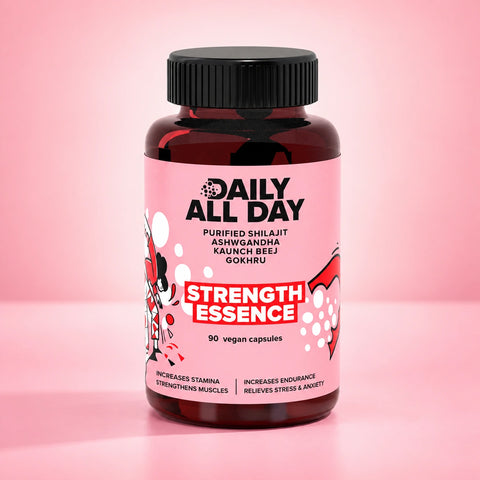
Daily All Day's Stress Free- Relief is formulated as an FSSAI-compliant dietary supplement (not an AYUSH-licensed medicine), designed to support the body's stress response through a combination of adaptogenic botanicals including ashwagandha. It is not a pharmaceutical, does not require a prescription, and is not approved to treat any clinical condition.
Here's a simple daily stack for a founder:
- Morning (with breakfast): Stress Free- Relief (supports daytime stress resilience)
- Evening (with dinner): Omega 3-6-9 capsules (better fat absorption with a cooked meal containing oil or ghee)
- Before bed: Short physiological sigh practice + magnesium-rich snack (a small handful of almonds or pumpkin seeds)
30 / 60 / 90 Day Realistic Timeline
30 days: Most users report improved sleep onset and slightly reduced evening anxiety. This is when the adaptogenic effect begins building. Don't expect dramatic cortisol shifts yet. Consistency matters more than dose at this stage.
60 days: The studies on ashwagandha show measurable cortisol-related changes start appearing around the 8-week mark. Founders often notice sharper morning focus, less reactive mood during high-pressure calls, and fewer Sunday-night cortisol spikes.
90 days: This is where cumulative benefit shows most clearly. Omega 3-6-9's anti-inflammatory effects on the nervous system take 10-12 weeks to be meaningful. By 90 days, many users report better sustained energy, reduced mental fatigue, and noticeably improved sleep quality as measured by their own sleep trackers or simply waking more refreshed.
Try Stress Free- Relief →If exam stress is also part of your household picture (a younger sibling or your own college years are not far back), this related read on Ayurvedic support for student exam stress covers a very similar cortisol-driven anxiety pattern.
Real Questions Indian Founders Are Asking
Q: I've been on amlodipine for BP for two years. Can I still take an ashwagandha supplement?
Ashwagandha may have mild blood-pressure-lowering effects in some users. If you're already on antihypertensives like amlodipine, taking both without guidance could compound the effect. Consult your cardiologist or GP before starting. This is a real gap none of the top-ranking pages address directly.
Q: Does it matter if I take Stress Free- Relief during Navratri fasting or Ramzan?
During fasting periods, taking adaptogenic capsules on a completely empty stomach can cause mild nausea in some individuals. Take with a fruit snack, a small amount of dahi, or any light permitted food. During longer fasts, spacing timing to your sehri or post-fast meal works well.
Q: Monsoon makes my anxiety worse every year. Is this real or imagined?
It's real. Ayurveda's Varsha ritu (monsoon season) is classically associated with increased Vata dosha, which governs the nervous system and is linked with anxiety, irregular sleep, and heightened sensitivity. Humidity and reduced sunlight exposure also affect cortisol rhythms. Adaptogens are particularly useful during this season, as traditionally supported in Ayurvedic seasonal protocols.
Frequently Asked Questions
Should I take Stress Free- Relief before or after my Indian meals, and does it matter?
Yes, timing relative to meals matters more than most supplement guides admit. Stress Free- Relief is best taken after a meal to reduce any chance of gastric irritation from ashwagandha extract. If your schedule means a late dinner (10 PM, common for Mumbai and Delhi founders), taking it post-dinner is still effective. Avoid taking on a completely empty stomach, especially if you have a sensitive gut or eat a lot of spicy food.
I take levothyroxine for thyroid. Can I use a cortisol stress supplement for founders like this one?
Ashwagandha has been studied for its potential effects on thyroid hormone levels. Some small studies suggest it may influence T3/T4 in individuals with subclinical hypothyroidism. If you are already on levothyroxine or any thyroid medication, please consult your endocrinologist before adding any adaptogen supplement. This is particularly important for women managing thyroid conditions alongside stress, which is extremely common in urban India.
Is Stress Free- Relief an AYUSH-approved medicine or an FSSAI supplement? What's the difference?
This is one of the most common and least-answered questions for Indian buyers. Stress Free- Relief is an FSSAI-registered dietary supplement, not an AYUSH-licensed medicine. AYUSH-licensed products go through a separate regulatory pathway under the Ministry of AYUSH and carry stricter claims. FSSAI supplements are governed under the Food Safety and Standards Act and are positioned as foods that support health, not as medicines that treat conditions. This means Stress Free- Relief legally supports stress management as a dietary supplement, but does not claim to treat, cure, or diagnose any medical condition. Both categories are legal and regulated in India, just differently.
Who should NOT take this supplement? Specific conditions, not just generic advice.
Avoid without consulting a registered doctor or qualified Ayurvedic practitioner if you are: pregnant or nursing (ashwagandha is contraindicated in pregnancy and should not be taken without medical supervision in any trimester); on immunosuppressants (ashwagandha may modulate immune activity); on anticoagulants like warfarin or aspirin at therapeutic doses; post-surgery within 2 weeks (due to potential blood-thinning properties of some omega fatty acids); or if you have an active autoimmune condition. Children under 18 should not take adult adaptogen formulations.
During summer (April-June in India) versus monsoon, should I adjust how I use this supplement?
Ayurvedic seasonal wisdom (ritucharya) does suggest adjusting supplement use. In Grishma ritu (Indian summer), Pitta tends to dominate, and some practitioners recommend cooling adaptogens. Ashwagandha is considered warming in Ayurvedic energetics, so pairing it with cooling foods like dahi, coconut water, or cucumber raita in summer can balance this. In Varsha ritu (monsoon), Vata increases and adaptogenic support is considered particularly valuable. This is traditional Ayurvedic framing, not a clinical recommendation. If you have specific concerns, consult a qualified Ayurvedic practitioner.
How soon will I actually feel results, and what should I track?
The honest answer: subtle shifts in sleep onset often appear within 2-3 weeks. Noticeable mood and focus changes typically require 30-45 days of consistent use. The 60-day mark is where most ashwagandha studies show measurable cortisol-related outcomes. Track three simple things daily: time to fall asleep, how rested you feel at 7 AM, and how reactive you feel during your first stressful moment of the day. These are more useful markers than waiting to feel a dramatic shift.